How to Vet a Glass Jar Supplier in 2026
A glass jar is easy to photograph and hard to verify. The body in a catalogue photo says nothing about wall thickness, annealing, or whether the closure will actually seal. So the useful question is not whether a supplier looks professional, but which claims you can check before paying a deposit. GlassPacker publishes the interface data that decides this: 61 stock jars and bottles, 55 distinct closure descriptions, 1,000 pcs minimum per size, and 54 of the 61 shipping in five to seven days. Each section below turns one of those numbers into a test you can run on a real supplier.
Documents first, samples second
A real factory produces four documents in a day. A trading desk usually cannot, and that is the cheapest filter available.
Ask for the business licence under the same company name that appears on the quotation. Ask for a food-contact declaration covering the glass and, separately, the gasket or liner: in the EU that means Regulation (EC) 1935/2004 plus a national test such as German LFGB, in the US a food-contact statement for the closure material. Ask for an ISO 9001 certificate with a number you can look up. Then ask which HS code they use — glass jars and bottles normally ship under 7010.90, and a supplier who says they will check has not exported much.
Measure the glass, not the photo
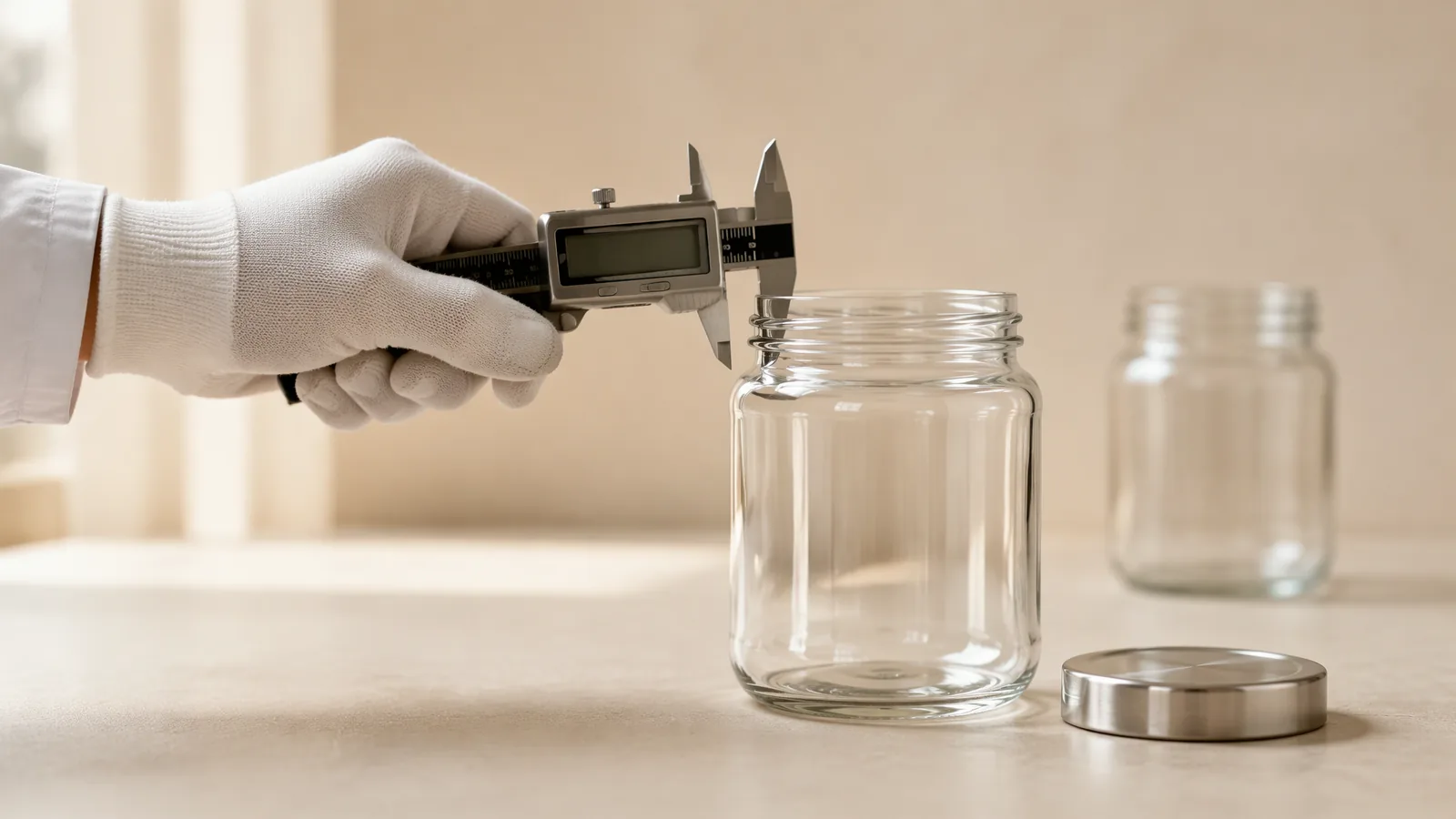
Three numbers decide whether a jar behaves: wall thickness at the body and at the neck, the fill point where the nominal capacity is actually reached, and the weight of the empty jar. Empty weight is the cheapest proxy for glass distribution. A 500 ml jar that weighs 20 g less than the sample you approved will feel thinner in the hand and break more often in transit.
Then check the finish. GPI codes write the mouth diameter and the thread profile into one string — 63-400 is a 63 mm neck with a 400 profile — and a closure only fits its own finish. The stock list uses six GPI codes across 61 SKUs, plus 16 SKUs quoting a "screw thread finish (GPI standard)" without a code. If a supplier cannot name the finish code of the jar they are quoting, the closure conversation has not started.
The sample is the contract
Sampling is where projects quietly fail. Ask what the sample is made on: a stock mould, an existing mould, or a new one. Ask when it ships rather than when it is promised; GlassPacker quotes seven to ten days for stock-mould samples. Then sign off four things in writing — the finish code, the fill point, the empty weight, and the closure torque or leak result. A sample approved on appearance alone is not an approval.
Ask what happens out of tolerance
Every factory ships a few off-spec pieces. The difference is what happens next. Ask for the inspection standard they work to, the acceptable quality level, and who pays for replacement — the factory, the forwarder, or you. A supplier who answers "no problem" has not thought about it. One who names the AQL and the claim window has. Write the answer into the purchase order, with the claim window in days.
Ask for the schedule in weeks, not days
Lead time is where quotations quietly disagree. Ask for production time separately from transit time, and ask what starts the clock: deposit, artwork approval, or sample sign-off. A stock SKU and a custom run do not share a schedule, and a supplier who quotes one number for both has not costed the job.
For reference, the stock list splits the two clearly: 54 of 61 SKUs sit in a five to seven day production band, while the remaining seven run 25 to 40 days because they are made to order. If a quote does not tell you which band you are in, the date is a guess.
Check the packing line, not just the product
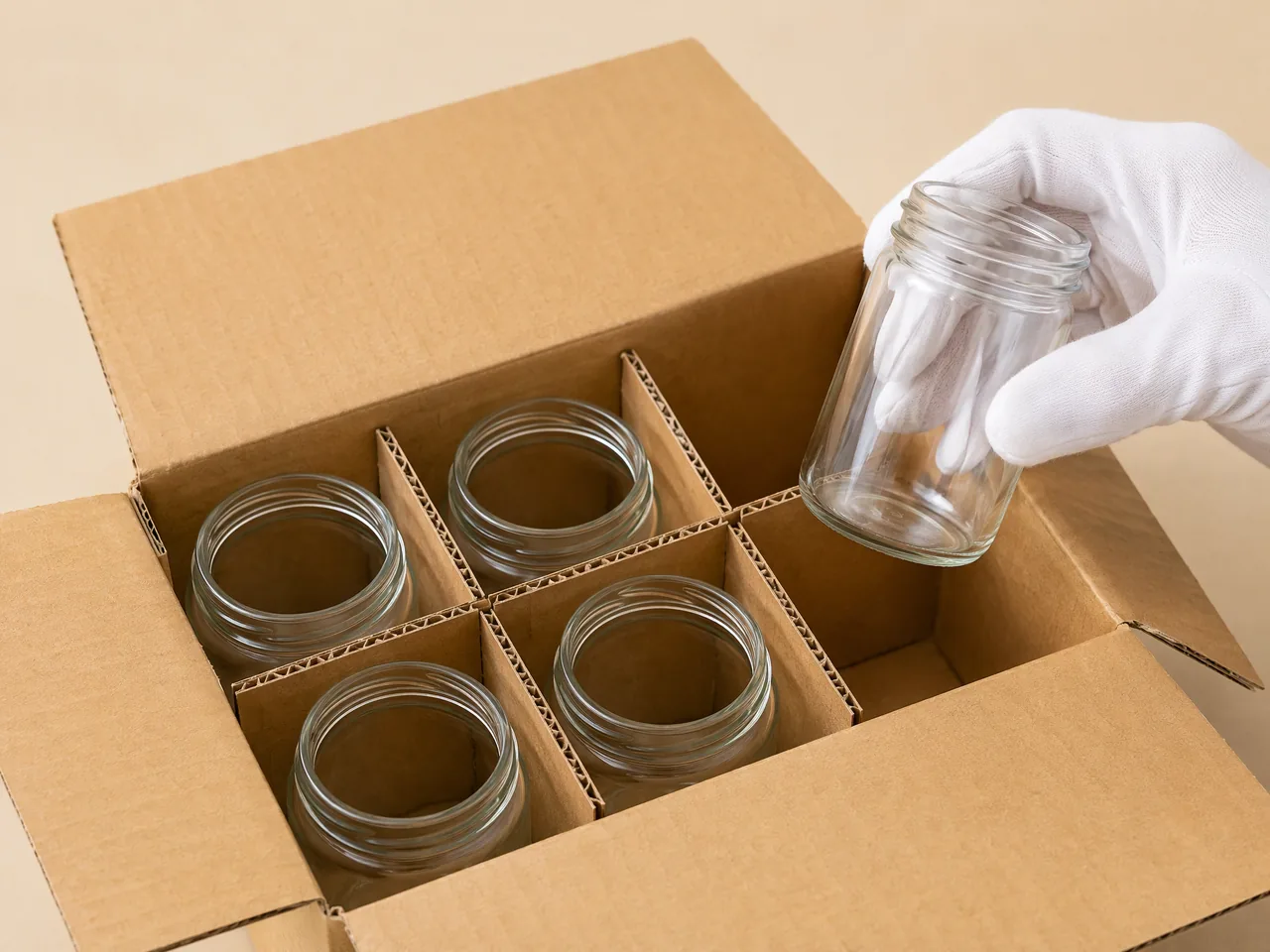
Breakage happens between the factory and your shelf, not on the inspection table. Ask for the carton specification: pieces per carton, divider material, and pallet pattern. Then ask for one carton to be dropped from 80 cm onto a corner and open it. Six jars in a die-cut divider is the pattern most stock SKUs use; loose jars in a bag is a warning sign. Ask for the pallet height and the number of layers too: a pallet that is 20 cm over a standard container height costs money at the port, not at the factory.
What is the minimum order for a stock glass jar?
1,000 pcs per size, whatever the closure. A new mould, a new finish or a custom colour is quoted separately, because the mould fee and the run length change.
How long does sampling take?
Seven to ten days for a stock mould, longer for a new one. Ask for the ship date of the sample, not the promise date.
Can a supplier be verified without visiting the factory?
Most of it. Documents, finish codes, wall thickness measured on the sample and one drop-tested carton cover the decisions that go wrong most often. A visit earns its cost when the order is large enough that a second production line matters.
Send the capacity, the finish and the closure you have in mind to the inquiry form. GlassPacker answers with the finish code, the empty weight and the MOQ in one round — 61 stock SKUs, 1,000 pcs per size, 54 of 61 in the five to seven day band.
Leave a comment
No comments yet — be the first to share your thoughts.