EXW Incoterms Explained: What Ex Works Really Means
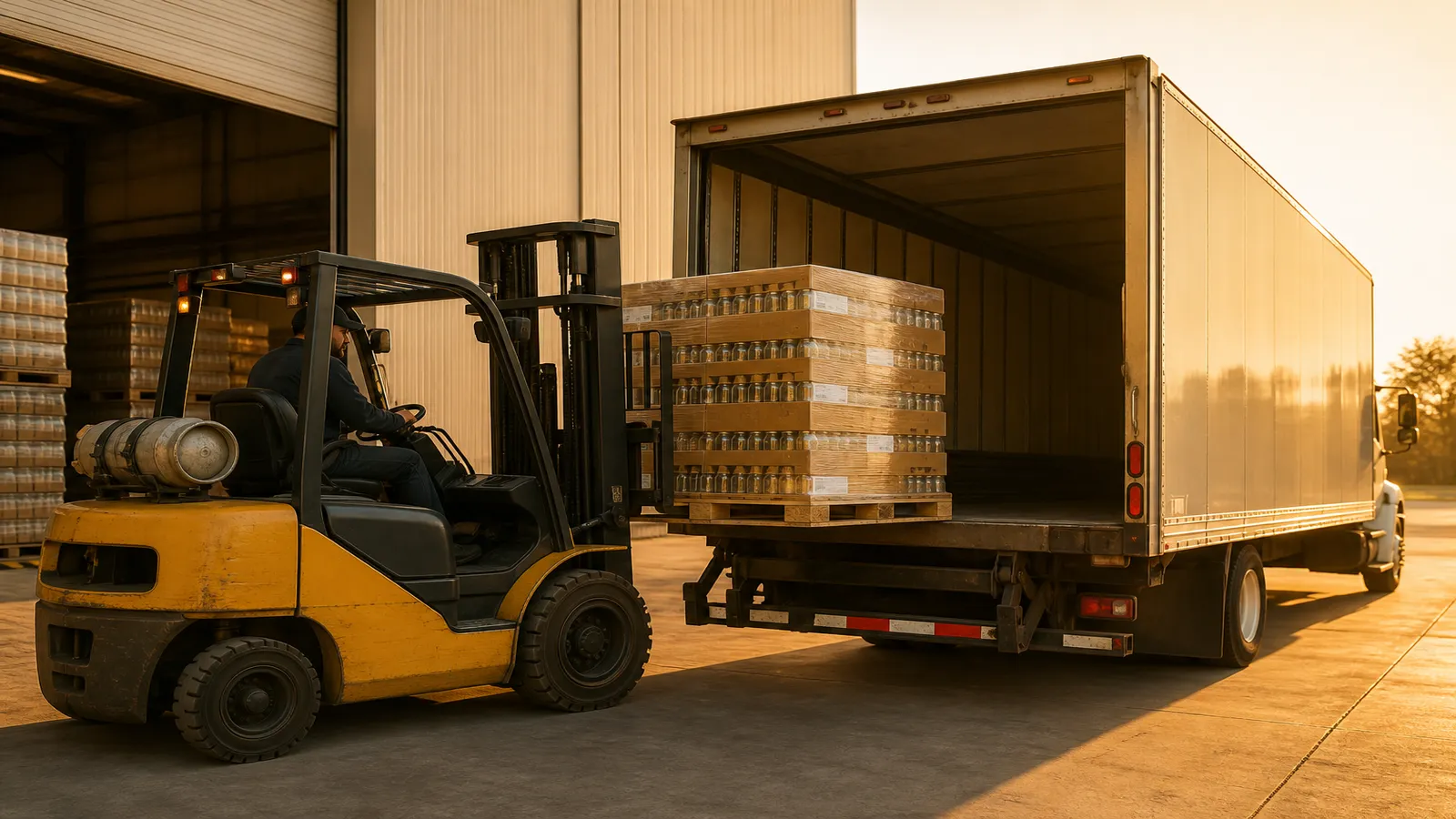
EXW — Ex Works — is the Incoterm that hands the buyer the most responsibility and the seller the least. It is also the term most often misquoted in glass packaging, because the price on an EXW quotation looks deceptively low. GlassPacker, a glass jar and bottle manufacturer with a 1,000-piece MOQ, publishes EXW as its baseline term so buyers can compare landed costs transparently. This guide explains exactly where the seller’s obligation ends under EXW, which costs and risks move to you, and when EXW is genuinely the right choice for your shipment.
What Ex Works actually means
Under Incoterms 2020, published by the International Chamber of Commerce, EXW means the seller delivers when it places the goods at the buyer’s disposal at the seller’s premises — typically the factory floor or warehouse — cleared for neither export nor loading. From that moment, every cost and risk is the buyer’s: loading onto the collecting vehicle, inland haulage, export customs formalities, international freight, insurance and import clearance. There is no other Incoterm where the buyer carries more obligation. That is why an EXW unit price is always the lowest number on any quotation — and why comparing an EXW price with a DDP price without adding freight, duties and handling is the most common budgeting mistake first-time importers make.
Who pays for what under EXW
A practical way to read EXW is as a checklist of obligations, and under EXW the buyer owns almost all of them. You arrange and pay for: loading at origin (unless negotiated otherwise), pre-carriage to the port or airport, export licence and customs declaration in the seller’s country, main carriage, cargo insurance, terminal handling, import duties and VAT, and final delivery. The seller’s only duties are to pack the goods appropriately for transport and to provide the commercial invoice plus the data you need for clearance. Two traps deserve attention. First, in many countries — including China — the exporter of record must be a local entity, so a buyer purchasing EXW still needs the seller’s cooperation for export clearance, usually via the buyer’s forwarder. Second, if your forwarder’s truck arrives and loading is slow or needs special equipment, waiting costs land on you, not the factory.
Why sellers quote EXW — and what buyers should check
Sellers favour EXW because it removes freight risk from their margin: no missed vessels, no damaged-in-transit claims, no surprise fuel surcharges. For buyers, EXW makes sense when you already have a trusted forwarder with strong rates on your trade lane, when you consolidate cargo from several suppliers in one container, or when your finance team wants full control of freight and insurance costs. It makes less sense for first shipments, for fragile glass cargo where loading quality matters, or when you lack an entity that can handle export formalities in the origin country. Before accepting an EXW quote, ask three questions: is loading onto my forwarder’s vehicle included in writing, who produces the export customs documents, and what are the packed carton dimensions and pallet heights so my forwarder can price accurately.

EXW, FOB and DDP at a glance
The three terms form a responsibility ladder. EXW: the buyer runs everything from the factory door. FOB (Free On Board): the seller additionally loads the goods and clears export customs, and risk transfers once the cargo is on board the vessel — a popular middle ground for sea freight. DDP (Delivered Duty Paid): the seller runs everything to your warehouse, duties included, and you simply receive the goods. Price follows responsibility: EXW looks cheapest, DDP looks dearest, but the true landed cost is identical work priced by different parties. The right choice depends on who can buy that work more efficiently — your forwarder or your supplier.
How GlassPacker quotes EXW in practice
At GlassPacker, an EXW quotation is never a bare unit price: it lists the per-carton gross weight, packed dimensions, pallet count and HS code 7010, so your forwarder can return a door-to-door price within 24 hours. We also load the collecting vehicle at no charge when the buyer confirms it in the purchase contract — a small clause that removes the most common EXW dispute. If you are comparing terms, ask for EXW and DDP prices side by side; the difference is your real freight budget.

EXW questions buyers ask us
Does EXW include loading at the factory?
Not by default under Incoterms 2020. Loading is the buyer’s obligation unless the contract states otherwise — always put “loading included” in writing if that is your expectation.
Can I buy EXW without an agent in the origin country?
Practically, no. Export clearance requires a local exporter of record, so most buyers hand that step to their forwarder’s local office while keeping the EXW price structure.
Is EXW cheaper than DDP overall?
The landed cost is usually similar; EXW is cheaper only when your forwarder beats the supplier’s freight rates or when you consolidate several suppliers into one container.
Send GlassPacker your specification and destination port and we will return EXW and DDP quotations side by side within 24 hours, with carton data your forwarder can price immediately — MOQ 1,000 pieces, samples in 7–10 days.
Leave a comment
No comments yet — be the first to share your thoughts.