Glass Packaging for Honey: a 2026 Guide
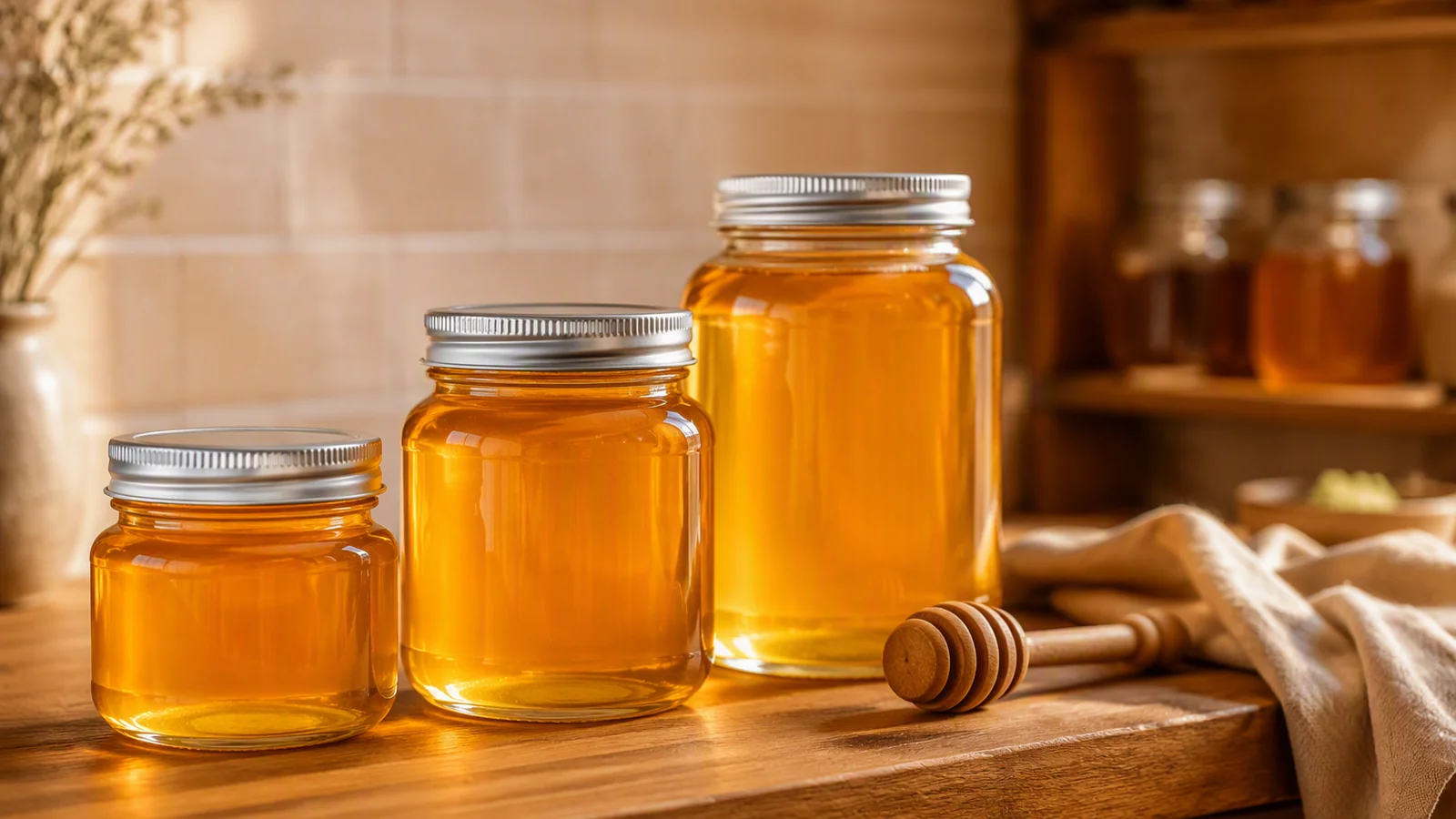
Honey is one of the few products shoppers judge with their eyes first. The color, the way it catches light, the slow pour - all of it happens through the jar. That is the simplest reason most premium and craft honey brands reach for glass: the jar is the shelf, the jar is the label, and the jar is what the customer remembers. Glass packaging for honey is also one of the most straightforward glass categories to source, with stock shapes that cover almost every retail size from 100 ml tasting jars to 1 liter family formats.
For brand owners weighing glass for a new honey SKU in 2026, the decisions usually come down to five things: jar shape, closure, capacity range, minimum order quantity and lead time. Get those right and the rest - artwork, labels, retail-ready cartons - is the same work you would do for any packaged food. We wrote this guide so a private-label team, a co-packer or a brand founder can walk into sourcing conversations at any reputable glass supplier knowing what to ask for and what to push back on.
Why honey and glass work so well together
Glass is chemically inert. It does not exchange anything with honey - no plasticizer, no lining, no off-note after long shelf storage. For a product that can sit on a shelf for twelve to twenty-four months, that stability matters more than it does for almost any other grocery category. Honey also has low water activity, so the jar only has to keep moisture out; an airtight seal does that.
Visually, high-white soda-lime glass shows honey at its true color. The clearer the glass, the more the customer sees what they are buying. Light-amber honey reads as light-amber through the jar; darker chestnut honey reads darker. There is no need for a printed color band to do that work.
Jar shape and capacity: choose once, range widely
Honey jars come in two broad shape families. Round jars - sometimes called classic or tulip - are the traditional choice for varietal honey and gift formats. Square jars - sometimes called modern or premium - stack better on shelf and ship more efficiently per cubic meter. Both are stocked shapes at most glass packaging suppliers, so the choice is a brand decision, not a tooling decision.
Within either family, capacity is the easiest place to standardize. Most retail honey ranges use four sizes: 100 ml tasting, 250 ml single-serve premium, 500 ml family standard and 1000 ml value. Sourcing one round screw-top jar across all four sizes means one supplier, one closure spec, one artwork template and one packaging line setup. GlassPacker stocks a screw top honey jar in exactly this 100 / 250 / 500 / 1000 ml run, so a brand can launch a full range from a single SKU family.
Glass packaging for honey typically uses a short screw neck finished to a standard 38 mm or 53 mm thread, so closures are interchangeable across the family. That keeps tooling cheap and helps if you ever need to swap suppliers.
Closures: aluminum screw caps vs. tamper-evident options
Two closure styles dominate honey. The plain aluminum screw cap - silver or gold - is the most common and the cheapest, and it gives the airtight seal honey needs. The tamper-evident version adds a breakaway band that the customer has to twist off first, which some retailers and most export markets require. The band falls away at first use and the cap then behaves like a regular screw cap.
For private-label ranges, plain aluminum with a custom color or a hot-foil logo on top is the best value. GlassPacker offers silver or gold aluminum screw caps as standard and can arrange custom closure colors on request, all within the same 1,000 pcs MOQ as the jar.
MOQ, samples and lead time for honey jars
Glass jars are heavier and more fragile than pouches or PET, so most suppliers set a minimum order quantity at the case level - usually 1,000 pieces per size and shape, the same MOQ of 1,000 pcs per size GlassPacker applies to every stock design. A brand-new shape is quoted per project: a one-time, brand-owned mold fee and its tooling window come first, and the piece minimum is confirmed with the specification. For a brand launching a honey range, the fastest path is a stock shape, which keeps custom logos on the cap or paper label rather than in the mold.
Sampling matters more for honey than for most categories because honey pours differently depending on viscosity. A 500 ml glass jar that looks identical on a data sheet can feel very different in the hand. At GlassPacker, samples of stock honey jars take 7 to 10 days to land, and plain stock production runs in the 5–7 day band; decorated or custom-colour runs sit in the 25–40 day band. That timeline is the same for both round and square stock shapes.
Compliance and shelf-life notes
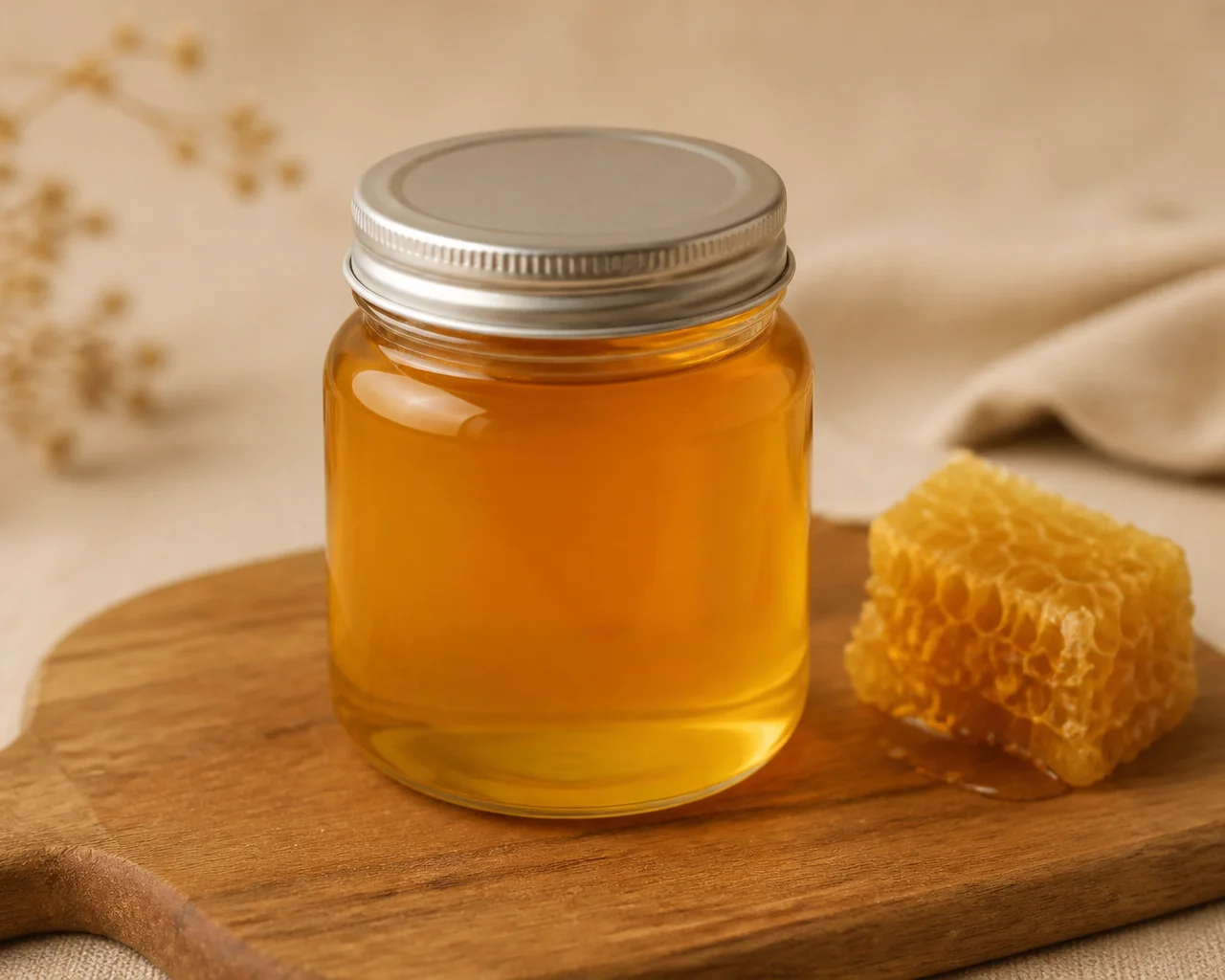
Honey is shelf-stable, but it can crystallize over time. Crystallized honey is still good - customers simply warm the jar in hot water to re-liquefy - so glass packaging is one of the few formats that handles both states gracefully. The aluminum screw cap does not corrode in contact with honey, and the jar can go from pantry to microwave (loose) to dishwasher without issue.
For brands selling into the EU, glass packaging for honey sits comfortably inside the EU PPWR recyclable-by-2030 framework; for brands selling into the US and Canada, glass is generally exempt from resin-code labelling. In both regions, a clean glass jar with a metal closure is one of the cleanest end-of-life stories a honey brand can tell.
Quick answers
What size glass jar is most popular for honey?
The 500 ml size is the most commonly ordered for retail honey; it pairs with 250 ml for premium SKUs and 1000 ml for value or foodservice lines. A 100 ml tasting size is popular for gift sets and hotel amenities.
Is aluminum or plastic better for honey jar lids?
Aluminum screw caps are the standard. They are food-safe, do not corrode in contact with honey and accept custom finishes and hot-foil logos. Plastic lids are lighter and cheaper, but they are less premium at the shelf and harder to recycle alongside the glass.
How long does it take to source glass honey jars from China?
For stock shapes like the screw top honey jar at GlassPacker, samples take 7 to 10 days and plain stock production runs in the 5–7 day band; decorated runs sit in 25–40 days. Sea freight to the US or EU adds roughly 25 to 35 days, so the total clock from artwork approval to first delivery is roughly 5 to 7 weeks for a plain stock shape.
Honey is a category where glass quietly does its job. The jar protects the color, the closure holds the seal, and the shape goes from shelf to kitchen to recycling bin without ever losing the food inside. Send your capacity range, fill volume, closure preference and destination country - GlassPacker replies with MOQ, sample timing and lead time within one business day.
Leave a comment
No comments yet — be the first to share your thoughts.