Sampling Glass Jars in 2026: The Approval Gate
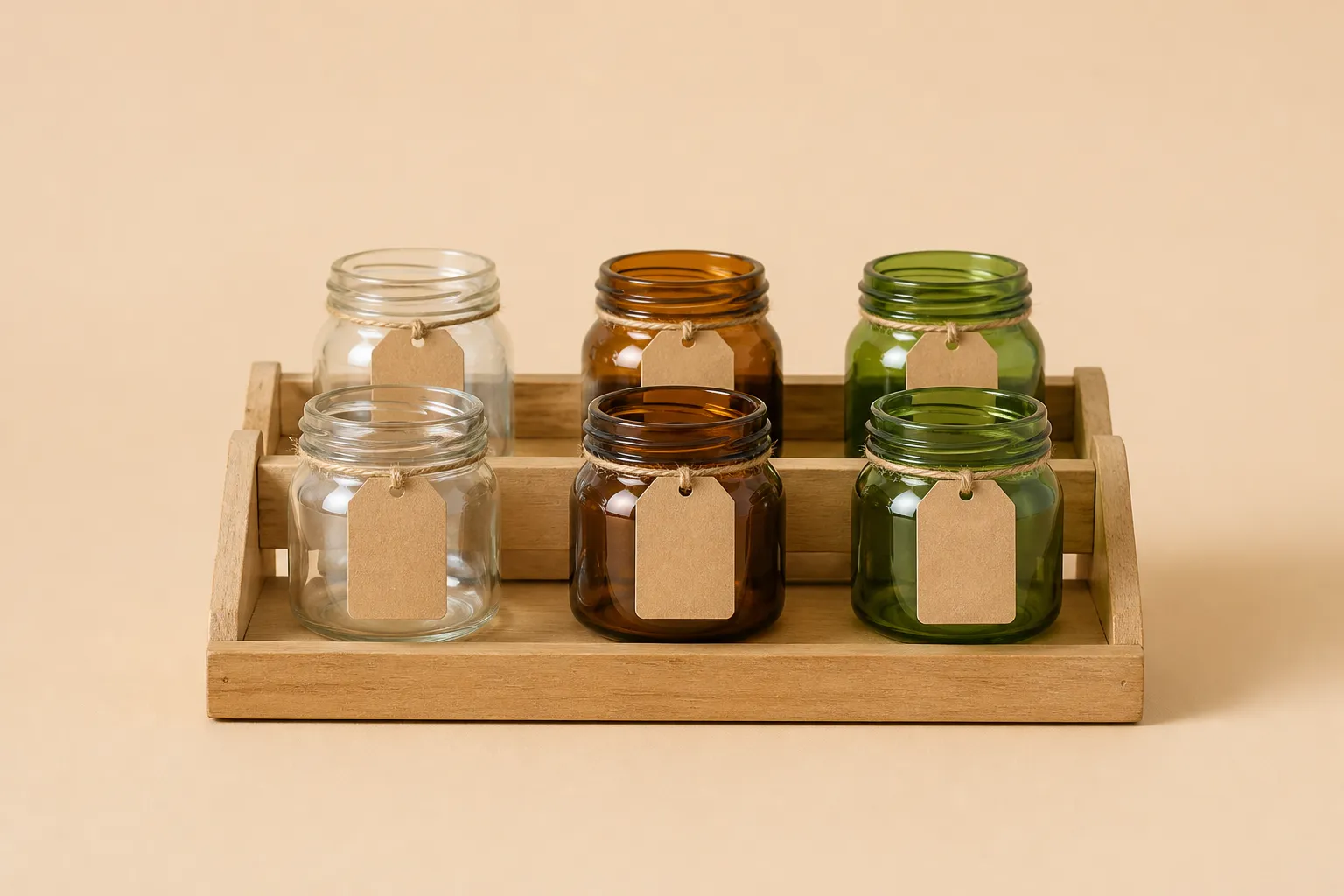
Every glass jar order has a gate before it has a production slot: the sample stage. In 7–10 days on stock shapes, a physical sample puts capacity, closure fit, color and label panel in your hands before a single carton is produced — and everything approved at that gate is exactly what the production run repeats. This 2026 guide walks the sample stage the way GlassPacker runs it: what gets approved, why samples run ahead of production instead of in parallel, how the 7–10 day window stacks against the tooling and freight clocks, and what to put in a sample request so the first sample is the only sample you need.
What the sample stage actually approves
A production sample is an approval instrument, not a preview. Four decisions get locked on it: fill volume and capacity against your filling method; closure fit and torque on the actual neck finish; color and embossing as matched batch references; and the label panel — its printable area, its curvature, its contrast against the glass. The sample stage is where color, embossing, closure and label panel choices get approved, which is why it sits in front of the production schedule rather than inside it.
Decoration deserves special caution: printed artwork behaves differently on curved glass than on a flat proof. Glass curvature distorts printed decoration, so the label panel and any silk-screen art must be judged on the actual silhouette — a flat PDF approval is not a sample approval.
The gate has a documentary side too: the approved sample becomes the reference the quotation cites — capacity as filled, closure as assembled, color as matched — so the numbers on the offer and the object in your hand cannot drift apart between approval and production.
Why samples run ahead of production, not in parallel
Running samples in parallel with production looks like a time-saver and behaves like a gamble: if the sample changes anything — a closure torque, a label panel millimeter, a batch color shade — the run already on the furnace inherits the unapproved spec. Sequencing the sample first converts every downstream decision into a repeat of an approved state.
The sequence also protects the tooling path. On a stock silhouette the sample comes straight from proven tooling in the 7–10 day window. On a private mold, the trial stage inside the 35–45 day tooling window plays the same role: wall thickness, capacity and finish are checked against your drawing before any run is scheduled — the mold fee answers state that window and who owns the tool behind it.
The sample clock inside the four lead-time bands
Sampling is the first of four clocks: 7–10 days for stock shapes, then the 5–7 day stock production band, the 25–40 day band for decorated or custom-color runs, and the 35–45 day tooling window when a private mold is involved — with ocean freight stacked on top. The lead-time guide walks the full band-by-band calendar; the sample-specific rule is simpler: every band behind the sample inherits whatever the sample approved.
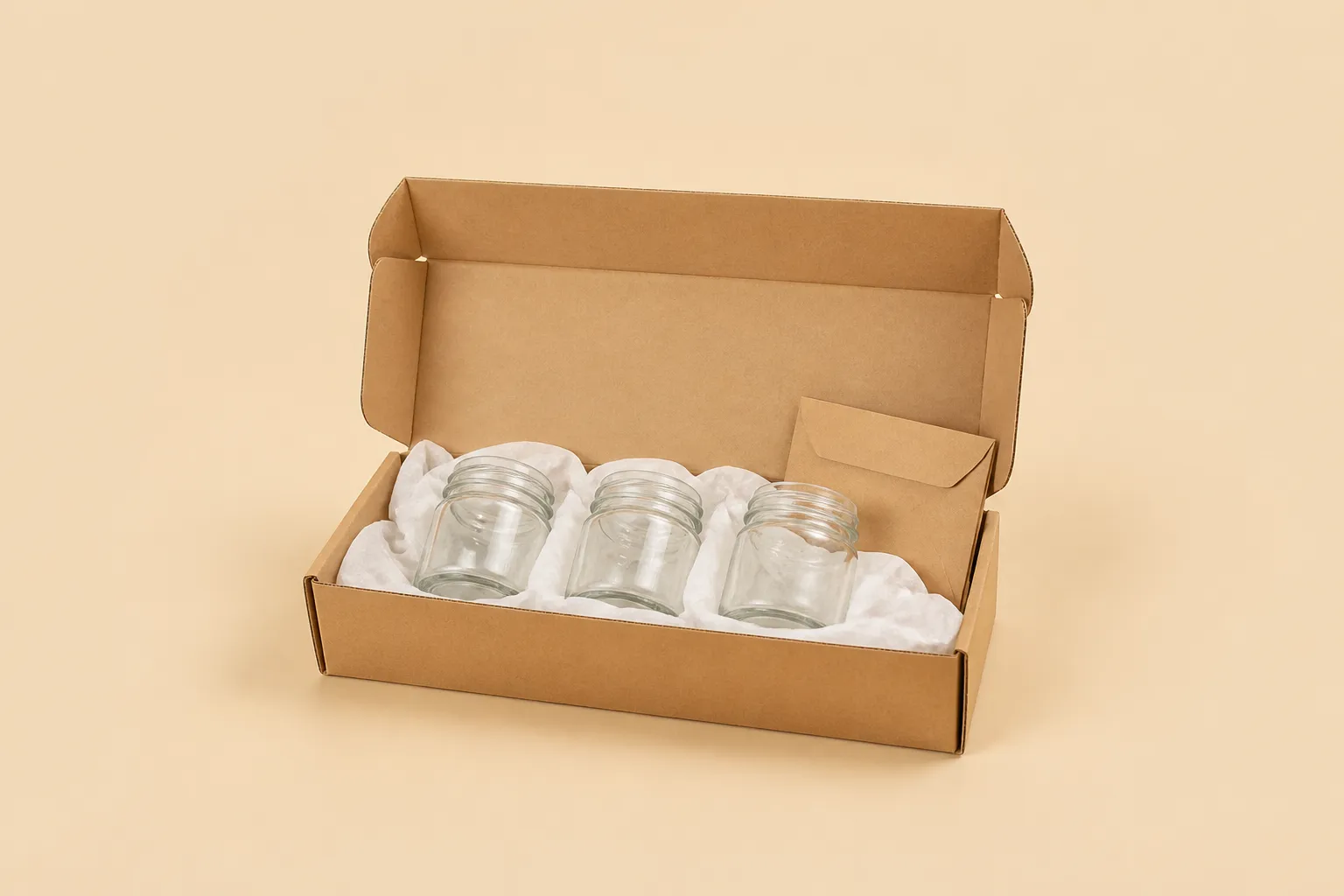
Two practical levers sit inside the sample clock. At GlassPacker, samples can ship by express courier if you need them for a buyer meeting, which compresses the transit days without touching the making days. And ordering within the same color group as an approved sample shortens the queue behind it, because batch color matching starts from a reference the furnace team already holds.
Freight sits behind all of it: sea transit from China runs roughly 18–25 days to the US West Coast and 25–35 days to the US East Coast or northern Europe. An early sample approval does not shorten the ocean, but it stops the calendar from re-opening after the booking is cut.
What to send with a sample request
A sample request that arrives complete comes back approved in one round. Five items do most of the work: target capacity and filling method; closure preference and any torque specification; the destination market, which fixes the food-contact paperwork that can travel with the sample; label panel dimensions or artwork, so print distortion on curvature is judged on real glass; and the color reference — a Pantone, a physical chip or an approved batch shade. The ordering guide frames the same inputs as the four numbers of a quote, because sample and quote are answered from one message.
Where documented food-contact compliance is required, say so in the same message: material test reports are arranged against the applicable requirement, issued for the specification you order, and shipped with samples when asked — arranged late, they become the critical path instead of riding along.
Sample versus production run: what changes, what does not
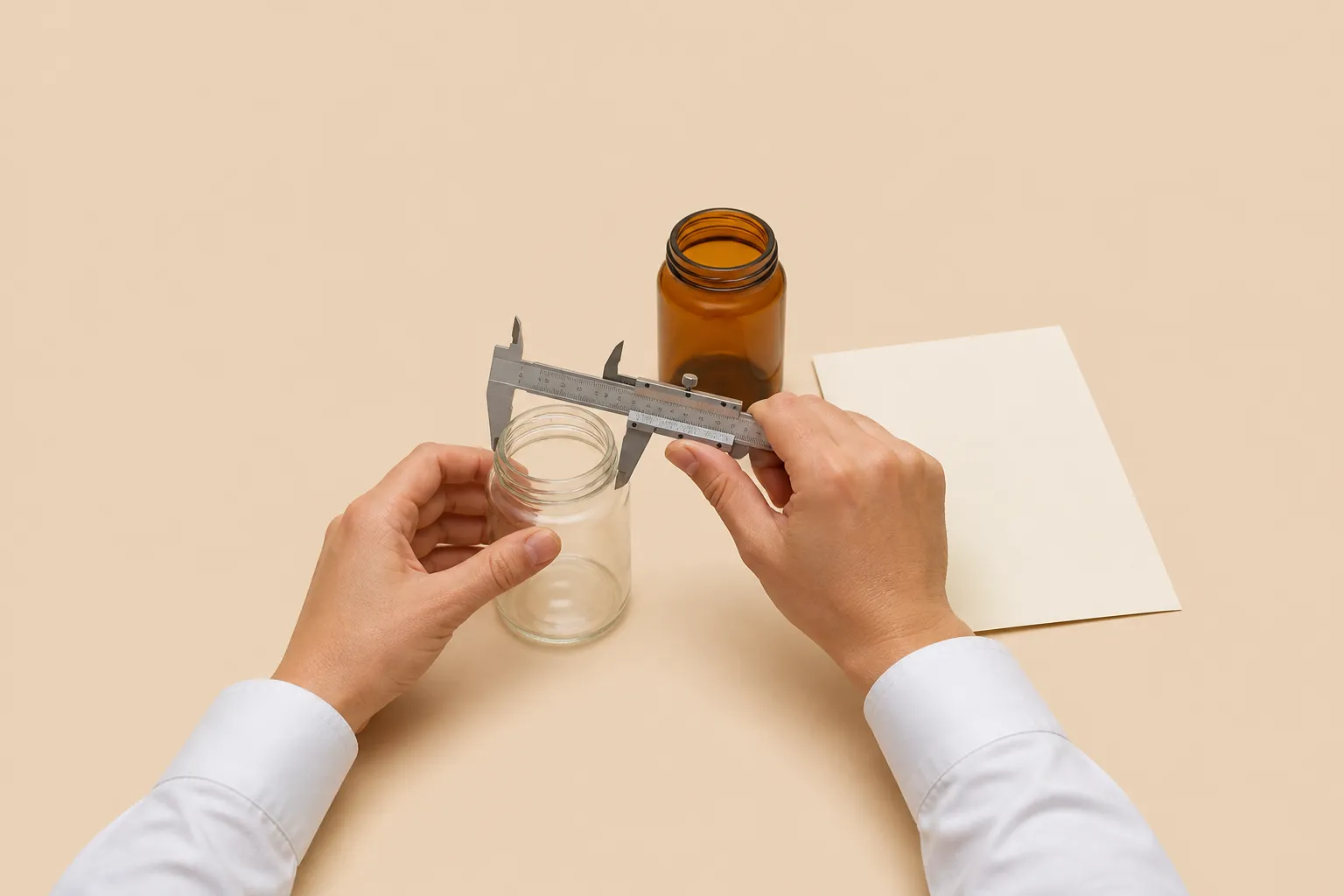
What does not change: the silhouette. A stock sample comes from the same proven tooling the production run will use, so shape, neck finish and wall thickness are constants, not variables. What changes is everything batch-specific: color matched to your reference, decoration set up on your artwork, closure assembled to your torque. That split is the reason an approved sample is a specification document in physical form.
It is also why re-sampling has a cost beyond courier fees: each new sample round re-opens an approved decision and re-queues the batch color match. Approve hard at the gate — capacity, closure, color, embossing, label panel — and the production band behind it stays exactly as wide as quoted.
The mirror image matters as much: what the sample stage cannot approve is bulk-only behavior — pallet stacking, container humidity, line speed at your filler. Those are specification and packing questions, answered by the carton data on the quotation rather than by one more sample on the desk.
Quick answers
What exactly gets approved at the sample stage?
Fill volume and capacity, closure fit and torque, batch color and embossing, and the label panel with its printed artwork on real curvature. Anything not approved at the gate stays a variable in the production run.
Do private-mold samples take the same 7–10 days?
No. The 7–10 day window applies to stock shapes on proven tooling. A private mold samples after its trial stage — wall thickness, capacity and finish checked against your drawing — inside the 35–45 day tooling window that sits in front of the first run.
Can food-contact test reports travel with the samples?
Yes, on request. Reports are arranged against the applicable requirement and issued for the exact specification ordered, so they can ride with the sample instead of arriving after it.
Put capacity, fill, closure, destination and color reference into the inquiry form and GlassPacker answers sample window, MOQ and the band behind it in one round — stock samples in 7–10 days, MOQ 1,000 pcs per size, and the approved gate written into the quotation.
Leave a comment
No comments yet — be the first to share your thoughts.