FOB Incoterms Explained: Free On Board
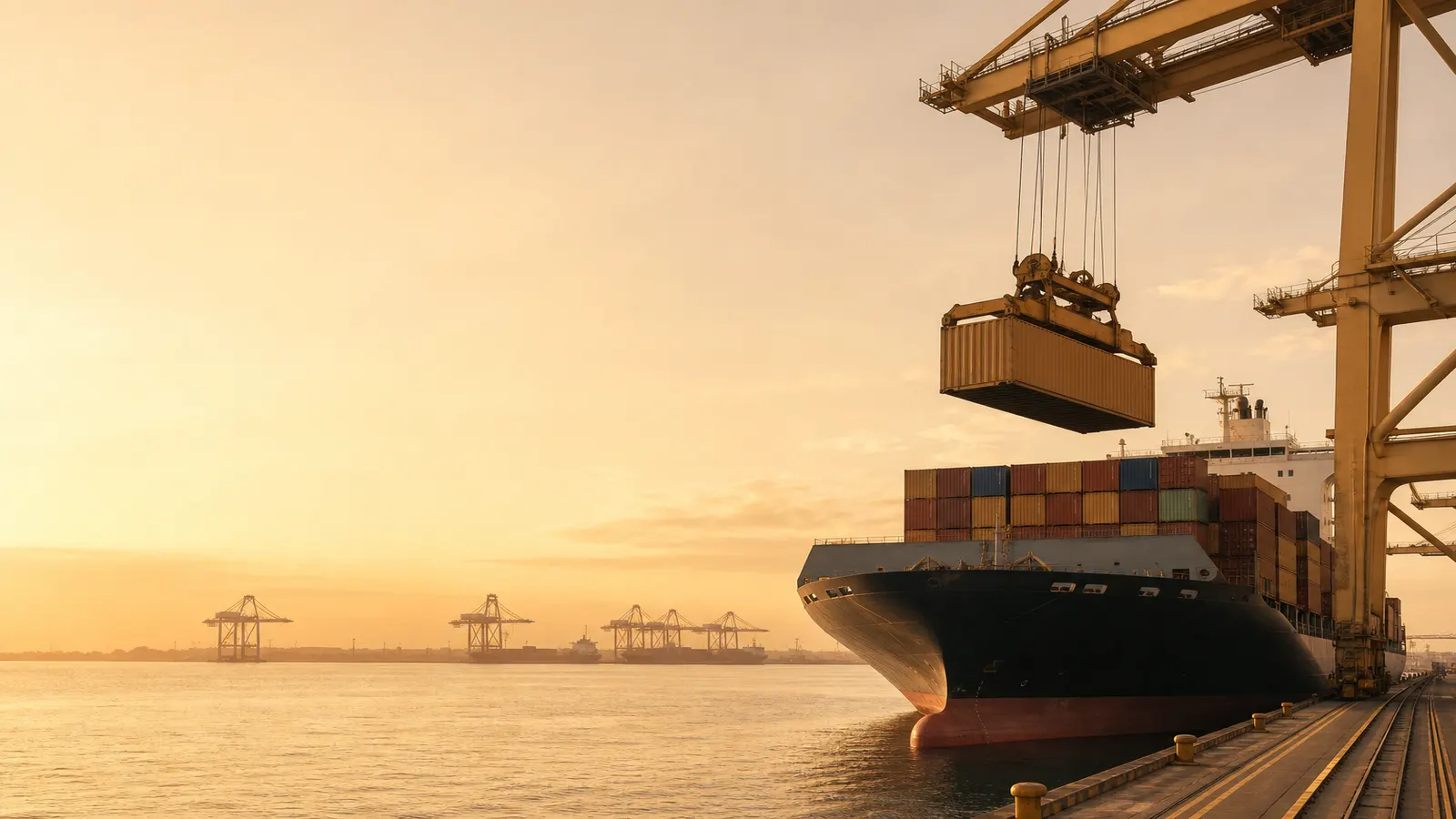
Ask ten importers which Incoterm they use most and FOB will win by a mile. Free On Board splits the journey cleanly at one moment: the goods crossing the ship’s rail at the named port of shipment. Before that line the seller pays and carries the risk; after it, everything is the buyer’s. For factories like GlassPacker, FOB is also the default quote basis — our FOB Ningbo and FOB Shanghai prices already include export cartons, palletising, export clearance and loading onto the vessel you nominate.
What FOB actually means
Under FOB the seller delivers when the goods are placed on board the vessel nominated by the buyer at the named port of shipment. From that instant the risk of loss or damage transfers to the buyer, and the buyer bears every cost from that point onward: main carriage, marine insurance, unloading, import duties and onward delivery.
The seller’s list is short but non-negotiable: manufacture and packing, inland transport to the port, export licences and customs clearance, terminal handling up to the ship’s rail, and loading on board. The buyer’s list starts where the seller’s ends: freight from the port of shipment, insurance, discharge, import clearance and final delivery.
One practical nuance matters more than the textbook line. "On board" means loaded onto the vessel — not dropped at the terminal gate. If your container sits in the yard for three days waiting for a rolled sailing, those storage and demurrage-style costs fall on whoever holds the risk at that moment, which under FOB is already the buyer once loading is complete. Clear booking coordination between seller and buyer’s forwarder prevents most of these disputes.
Who pays what under FOB
Seller pays: export packing (cartons, pallets, shrink wrap), inland haulage to the port of shipment, export customs declaration and any export licences, origin certificate if requested, terminal handling charges (THC) at origin, and the loading onto the vessel.
Buyer pays: ocean or air freight from the port of shipment, marine cargo insurance (FOB does not oblige either party to insure, but the buyer carries the risk so the buyer should insure), discharge and destination THC, import duties and VAT, and inland delivery to the warehouse.
Because the split is so clean, FOB quotes are easy to compare between suppliers: the price you see covers the same boundary everywhere. That comparability is exactly why FOB dominates China-origin trade.

The risk-transfer moment: on board, not at the gate
The single most litigated detail in FOB contracts is the exact transfer point. Incoterms 2020 is explicit: risk passes when the goods are on board the vessel. Everything before that — a forklift dropping a pallet in the yard, a container seal applied at the factory gate — is still the seller’s problem.
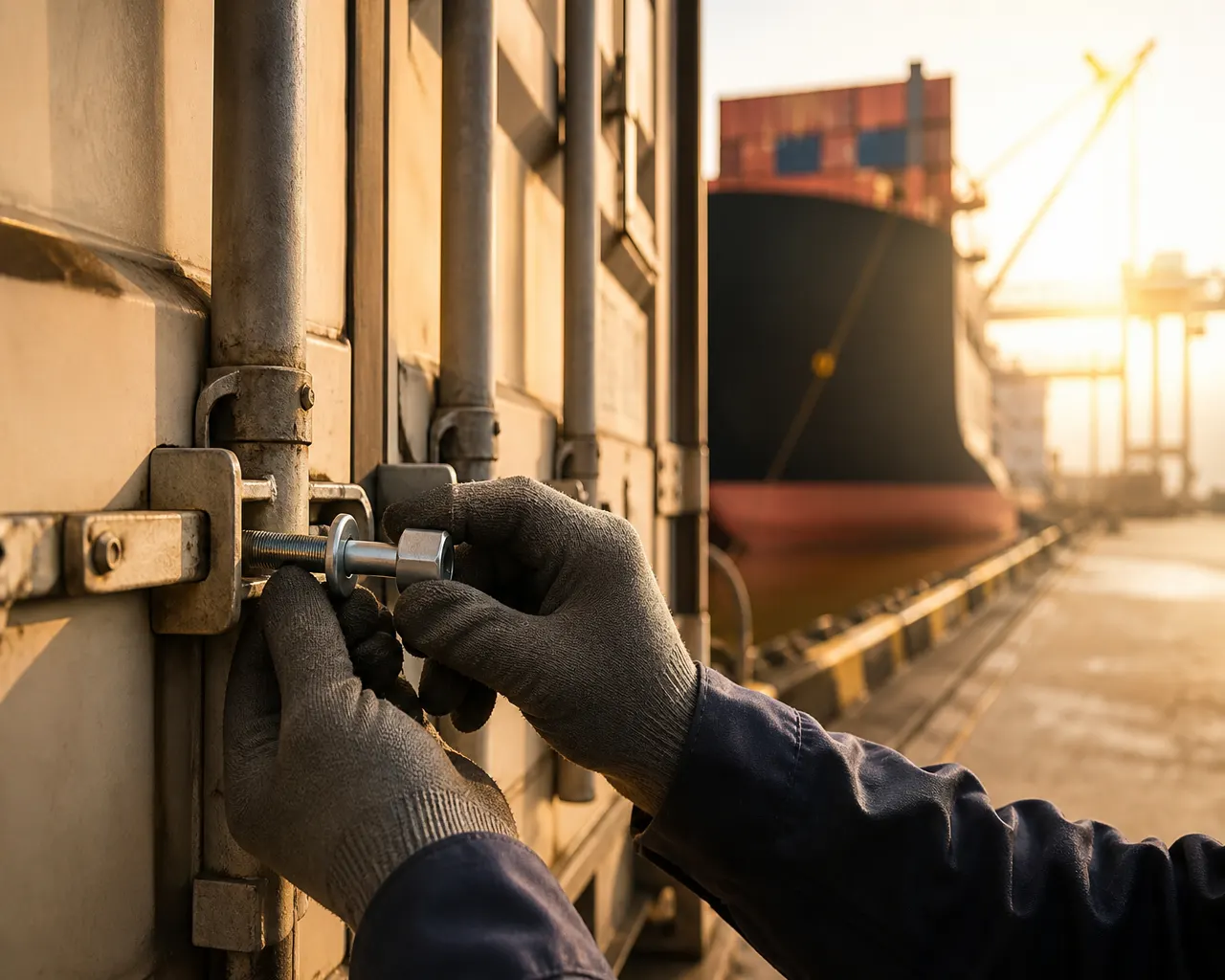
This is why serious suppliers photograph sealed containers, record seal numbers on the packing list and insist the buyer’s forwarder confirms the sailing. If a carton of glass jars arrives at the port with a broken seal, FOB says the seller still owns that loss — the goods never made it on board intact.
FOB vs EXW, CIF and DDP
EXW hands over at the factory gate: the buyer even arranges export clearance. FOB moves the handover to the ship’s rail and keeps export formalities with the seller. CIF adds freight and minimum insurance on top of FOB, so the seller pays the voyage but the buyer still carries the risk from the port of shipment. DDP goes furthest: the seller delivers duty-paid to the buyer’s door.
For most first-time importers of glass packaging, FOB strikes the best balance: you control the freight contract and insurance (usually cheaper than the supplier’s markup) while the supplier handles everything on the Chinese side, including export paperwork you cannot file yourself.
Real FOB scenarios from a glass jar factory
Scenario one — the rolled sailing. A buyer’s forwarder books space for Friday; the vessel slips to Tuesday. The containers wait in the yard. Under FOB the goods are not yet on board, so storage costs and any damage in the yard remain the seller’s. Good suppliers build a small buffer into lead times and confirm bookings 72 hours before cut-off.
Scenario two — the THC argument. Terminal handling charges at origin belong to the seller under FOB. Some forwarders invoice THC to the consignee by habit; the contract should state that origin THC is included in the FOB price to avoid double billing.
Scenario three — the insurance gap. Between the factory gate and the ship’s rail the seller carries uninsured risk unless it buys domestic transit cover. Between loading and discharge the buyer carries it. The cleanest practice: seller insures inland legs, buyer insures the sea leg from the moment of loading.
How GlassPacker quotes FOB
Every quotation states the Incoterm and the named port explicitly — for example FOB Ningbo, Incoterms 2020 — with carton dimensions, gross weight and HS code 7010 listed so your forwarder can price freight the same day. MOQ starts at 1,000 pieces per item and samples ship in 7–10 days, so you can validate the jar before committing to a full FOB order.
If your forwarder prefers CIF, we quote that too; the boundary simply moves, and the packing spec never changes. The stock jar and bottle shapes in our catalogue are the ones we quote FOB Ningbo and FOB Shanghai most often. The stock vs custom mold lead-time bands explain why samples and mass production run on different clocks.
Does FOB include insurance?
No. FOB obliges neither party to insure. Risk passes to the buyer at the ship’s rail, so the buyer should arrange marine cover effective from loading; the seller typically covers the inland leg to the port.
Which port should be named in an FOB contract?
The port of shipment where the goods will actually be loaded — usually the nearest major port to the factory, such as Ningbo or Shanghai for Chinese glass plants. Naming a vague range ("any China port") invites disputes over who pays repositioning costs.
Is FOB cheaper than CIF?
The goods cost the same; only the freight and insurance lines move. FOB is often cheaper overall because buyers negotiate ocean freight at their own contract rates instead of paying the supplier’s forwarding margin.
The GlassPacker FOB data file: declaration, duties, cost ladder
Duty and declaration data first: every GlassPacker FOB quotation carries the same five-number block — HS code 7010, per-carton gross weight, packed carton dimensions, pallet count and an MOQ of 1,000 pieces per size — plus a 7–10 day sample window. Glass containers under HTS 7010.90 enter the US at a duty-free general rate; China-origin cargo can still carry additional trade-measure duties that move with policy, so we fix HS code and origin at quotation and your broker confirms the current add-on in one call.
The FOB cost ladder: our price includes export packing, loading on board at the named port and export clearance; from the moment the cargo sits on board, risk is yours, together with main carriage, insurance, destination charges and duties. After loading our role is documentary — bill of lading, packing list and the HS 7010 declaration your bank or broker needs — so a transit damage claim under FOB runs on your marine policy, not ours.
Ready to price your next order? Send the jar shape, quantity and destination port — GlassPacker replies with a full FOB quotation, carton spec and HS code within 24 hours.
Leave a comment
No comments yet — be the first to share your thoughts.