Glass Jar MOQ in 2026: What 1,000 Pcs Means
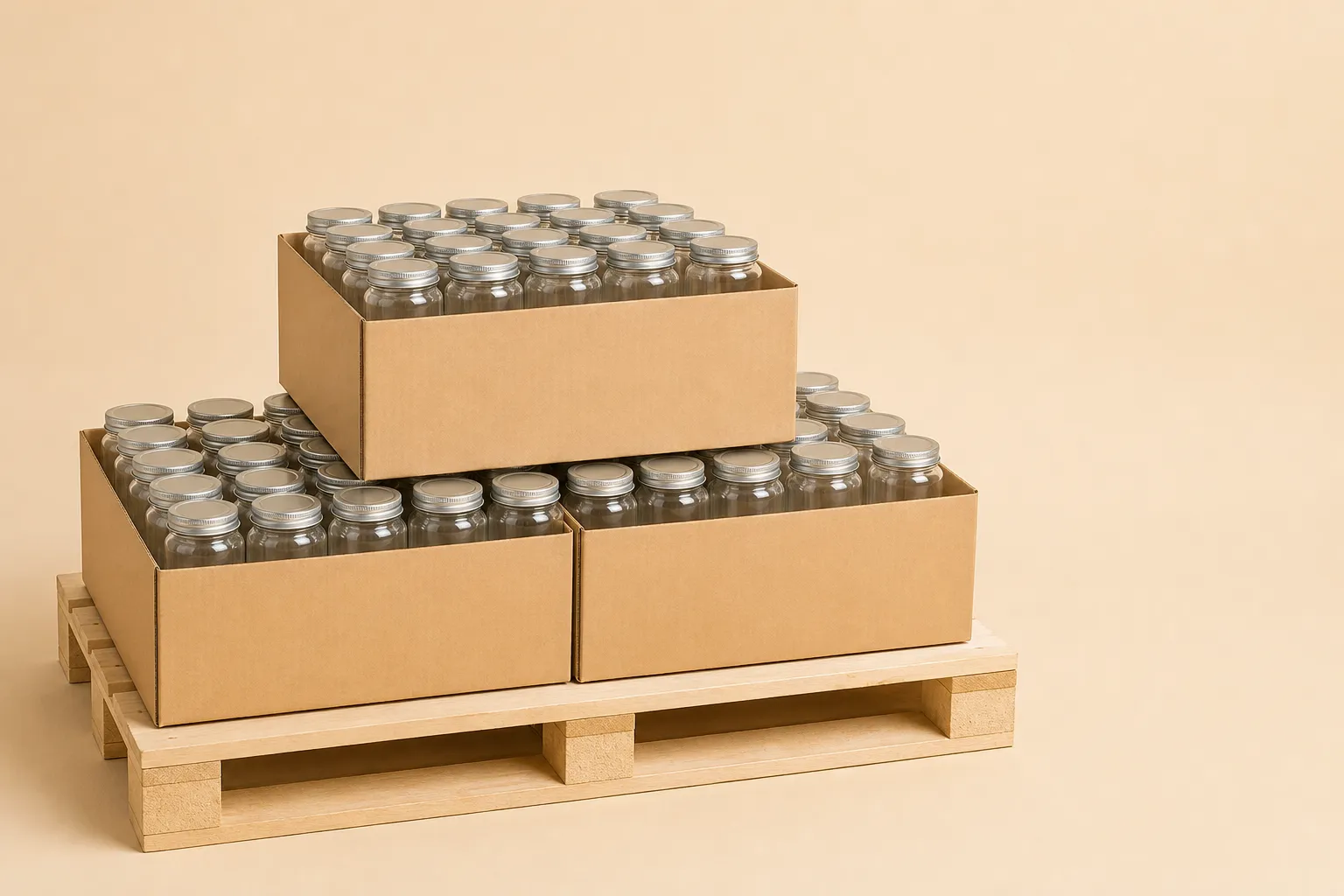
Minimum order quantity is the line buyers skim and suppliers defend, and it is rarely explained. In glass packaging it is not an inventory rule at all: it is the smallest run that keeps a forming slot economic on tooling that already exists. This 2026 guide reads the glass jar MOQ from the production side — what the number covers, why it is set per size rather than per order, and how decoration, colour and freight change what the minimum actually costs. At GlassPacker, every one of the 55 stock-mold designs in the live catalog carries the same minimum: 1,000 pcs per size.
What the 1,000-piece minimum actually covers
A minimum order quantity is often read as a sales policy. On a stock glass jar it is a production statement: each design in a stock catalog sits on its own proven tooling, and a production slot runs one shape at one capacity from start to finish. The minimum is the smallest run that fills that slot without pushing the per-piece cost of forming, annealing and checking into uneconomic territory. Nothing about it depends on how many other sizes sit in the same order.
That is why the number attaches to the size, not to the order. The 55 designs in the live stock catalog — from 100 ml mini jars to 1 L bottles across six categories — each carry their own 1,000-piece minimum. Three sizes in one shipment share a container and a customs entry, but they do not share a forming slot: each size books its own.
The carton arithmetic makes the minimum concrete. Export cartons in the catalog hold between 12 and 96 pieces depending on capacity, so the same 1,000-piece minimum packs into roughly eleven cartons at the 96-piece end and roughly eighty-four at the 12-piece end. Pallet count and gross weight follow from the carton count, which is why a serious quotation carries the packing mathematics per size instead of per order.
The uniformity of the minimum is itself evidence of where it comes from. The seven catalog designs that carry 25–40 day lead times — the decorated and custom-colour lines — hold the same 1,000-piece minimum as the 48 plain stock shapes that ship in 5–7 days. Decoration changes the calendar, as the lead-time guide details; it does not change the slot mathematics.
Why the minimum sits at the forming slot
Every slot carries fixed costs that do not scale with piece count: the tooling mount, the furnace feed allocation, the annealing lehr time, the dimensional and visual checks, the packing line setup. Spread across 1,000 pieces those costs are cents; spread across 200 they dominate the unit price. The minimum is simply the point where the fixed part of the slot stops distorting the piece price.
The contrast with a private mold sharpens the picture. A brand-owned tool adds a one-off mold fee and a tooling window of roughly 35–45 days before the first slot ever runs, and the stock-mold guide works through when that fee pays for itself. On stock tooling the fee was amortised across thousands of earlier runs — which is exactly why a stock minimum can stay as low as 1,000 pieces.
Sampling sits outside the minimum entirely. A stock-shape sample runs in 7–10 days as a courtesy of proven tooling, not as a production slot, and it exists to confirm capacity, neck finish and colour on the real curvature before any MOQ commitment is made. Treating the sample as the first step toward the MOQ, rather than an exception to it, keeps the two conversations separate.
Reading MOQ against unit cost and freight
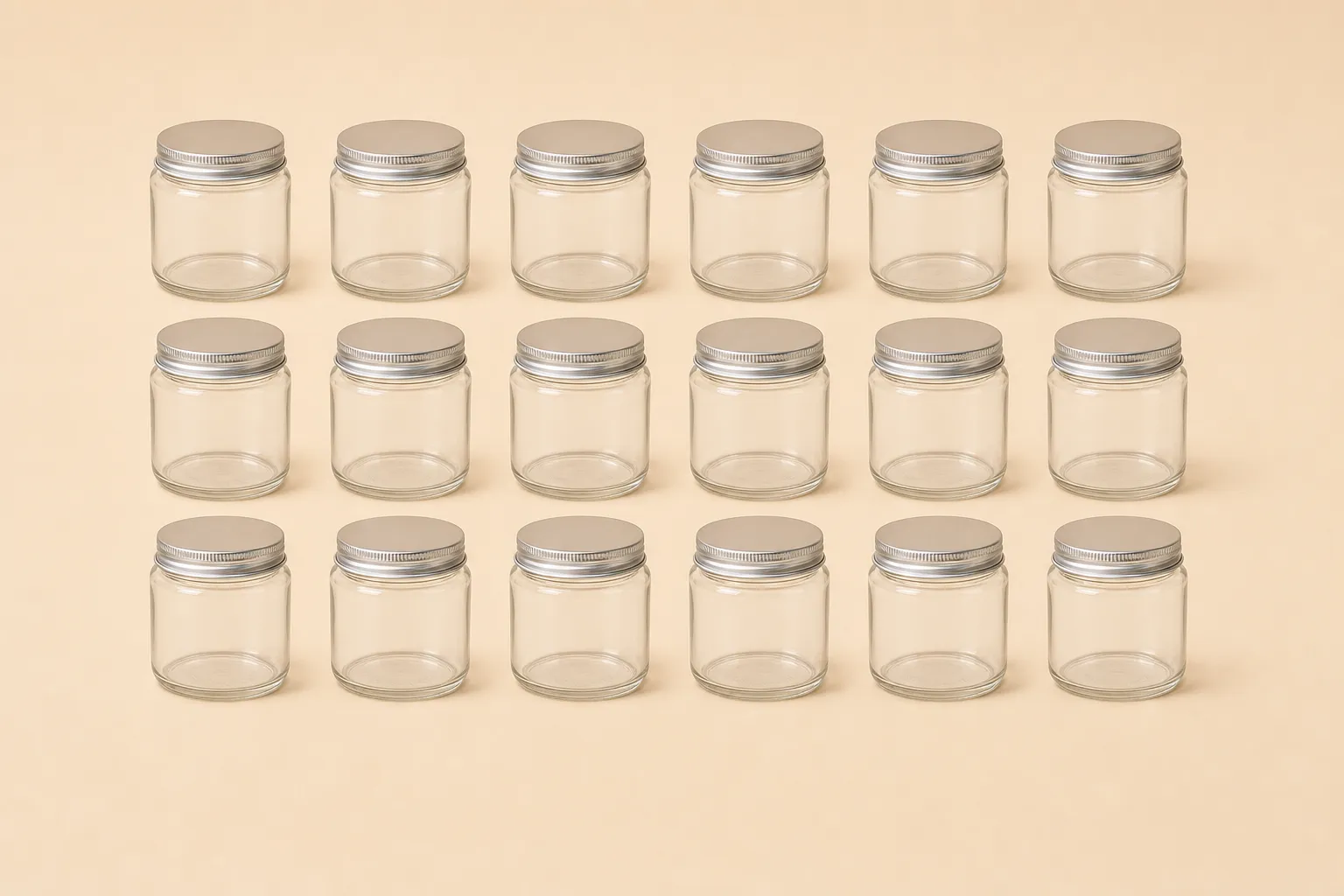
Read against freight, the minimum becomes a planning lever rather than a barrier. Sea transport from China to the US or EU adds roughly 25–35 days port-to-port, and the per-piece freight cost falls as cartons per booking rise — which is why consolidating several sizes into one shipment changes the landed cost of every piece in it.
This is where the quotation does its best work. GlassPacker lists gross weight, carton dimensions and pallet count per size at MOQ in every quote, so a buyer can compute landed cost per piece — unit price plus freight share — before placing the order rather than after the container sails.
Air freight compresses the same leg to about a week at several times the cost. At MOQ economics that trade only makes sense for samples and launch-critical top-ups; a full container of glass is a sea-freight decision, and the 1,000-piece minimum per size is what makes the container planable in the first place.
Decoration, colour and the minimum
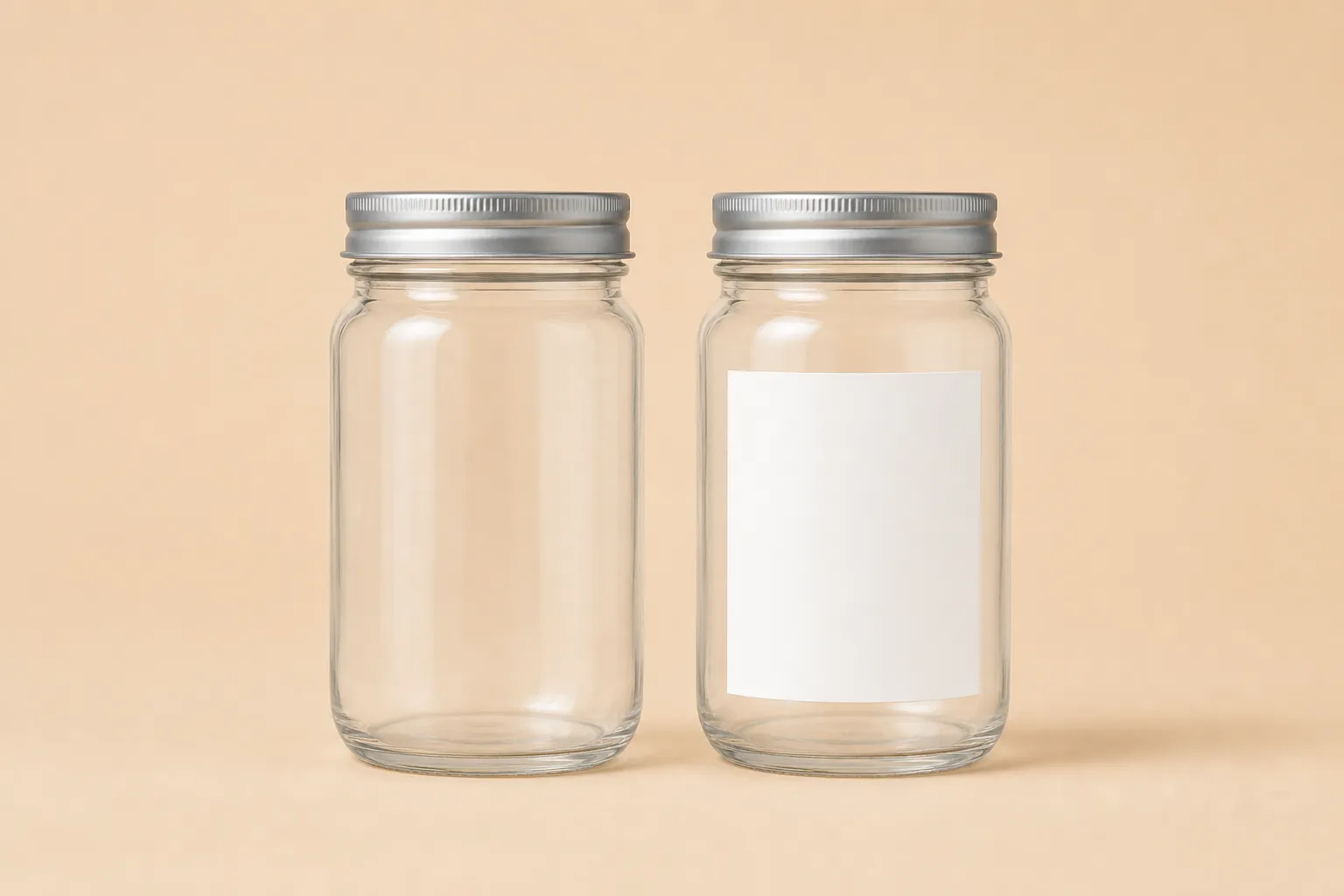
Decoration is a second factory that runs after the forming slot, not a change to it. Screen printing needs cured ink lanes, hot stamping needs foil registration per colour, frosted and sprayed finishes need drying time; each process queues behind the slot that produced the plain jar. The 1,000-piece floor is unchanged because the slot itself is unchanged.
Glass colour behaves the same way one step earlier, at the furnace. Clear flint, amber and green run in regular batches; a custom colour schedules a batch change and a flush of the previous glass. Neither moves the minimum, but both move the date — which is why colour decisions belong in the first RFQ, not the last.
The practical reading: judge decoration and colour by the calendar and the queues they add, and judge the MOQ by the slot. The minimum is the one number in the quotation that decoration, colour and freight all leave alone; conflating it with the calendar is how buyers end up negotiating the wrong number.
Five ways to plan orders around a per-size MOQ
Five planning moves follow directly. One: validate sell-through on a single design before adding a second size, so each 1,000-piece commitment is backed by demand rather than optimism. Two: align reorder cadence to the 5–7 day slot so MOQ cycles become calendar cycles. Three: consolidate sizes into one shipment to spread container, insurance and customs fixed costs across more pieces. Four: freeze decoration artwork before the slot opens, because a revised print file re-queues the whole decoration lane. Five: state quantities per size in the first RFQ so the quote returns per-size packing mathematics, not a blended guess.
None of the five asks a supplier to lower the minimum. All five change what the minimum costs per piece once it lands on your shelf.
A per-size MOQ is a mirror of the production system behind it: proven tooling, fixed slot costs, and packing mathematics that travel with the quote. Buyers who read it that way stop negotiating the number and start negotiating the plan around it — and the plan is where the savings actually live.
Quick answers
Why is the MOQ set per size rather than per order?
Because each size runs on its own proven tooling and books its own forming slot. Sizes can share a shipment, a container and a customs entry, but they cannot share the slot that sets the minimum.
Does decoration or a custom colour change the 1,000-piece minimum?
No. Decoration and custom colour add queues after forming — print lanes, foil registration, furnace batch changes — and those move the lead time, not the slot mathematics. The seven decorated catalog designs carry the same minimum as the plain stock shapes.
How does the MOQ interact with freight cost per piece?
Directly: cartons hold 12 to 96 pieces by capacity, so 1,000 pieces ship as roughly eleven to eighty-four cartons, and the per-piece share of a 25–35 day sea booking falls as cartons per booking rise. Consolidating sizes into one shipment is the cheapest lever available.
Send capacity, glass colour, decoration method, quantity per size, destination and your Incoterms to the inquiry form, and GlassPacker returns the per-size MOQ confirmation, packing mathematics, lead-time band and HS 7010 documentation in one reply — with samples in 7–10 days.
Leave a comment
No comments yet — be the first to share your thoughts.