Glass Jar Lead Times in 2026: Stock to Custom
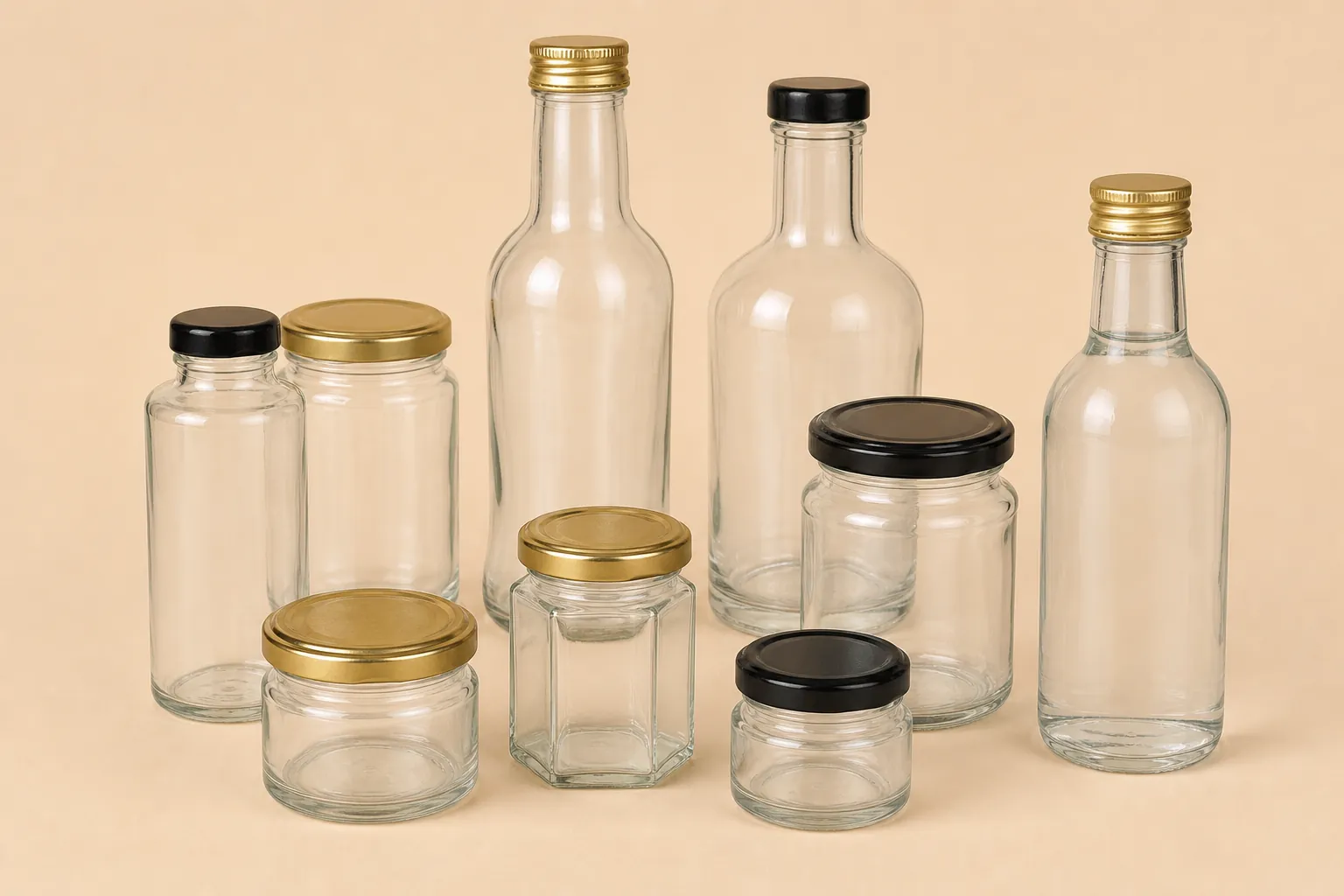
Lead time is the number most often guessed and least often verified in a glass packaging quotation. It is also the number that sets launch dates: a jar that ships in a week and a jar that ships in six weeks are the same product on two different calendars. This 2026 guide splits the glass jar lead time into its real components — stock shape, decoration, glass colour, tooling and freight — so each stage can be planned instead of absorbed as one opaque promise. At GlassPacker, 48 of the 55 stock-mold designs in the live catalog ship in 5–7 days at an MOQ of 1,000 pcs per size.
The four bands behind every lead-time quotation
Every glass quotation collapses four different clocks into one number. Separating them is the whole game: each band has its own driver, and only one of them — tooling — is optional.
Band one is the stock shape: a silhouette the factory already runs, booked as production time on proven tooling. This is the 5–7 day band, and it covers 48 of the 55 designs in the live stock catalog, from 100 ml mini jars to 1 L bottles across six categories.
Band two is decoration and custom colour on a stock body: screen printing, hot stamping, frosted finishes, cap-colour matching and non-standard glass colours all queue after forming. The seven catalog designs carrying 25–40 day lead times sit here — their schedule is set by decoration and colour matching, not by the mold.
Band three is a private mold: a brand-owned tool that must be machined, tried and approved before any production run, adding a tooling window of roughly 35–45 days plus a one-off mold fee. The stock-mold guide works through when that fee pays for itself.
Band four is freight, the clock buyers forget: sea transport from China to the US or EU adds roughly 25–35 days after the last carton is palletised, and it starts at sailing, not at order confirmation.
Read a quotation through these four bands and the delivery date stops being opaque: ask which band each line item sits in, and the number explains itself.
A worked example makes the stacking visible. A plain stock jar is band one plus band four: 5–7 production days, then 25–35 sea days. Add a decorated lane and the production leg moves into the 25–40 day band before freight even starts. Add a private mold and a 35–45 day tooling window sits in front of everything else.
Inside the 5–7 day band: what actually happens
Five to seven days is not a marketing number; it is the length of a production slot on tooling that already exists. The shape is formed, annealed, dimensionally checked and packed in export cartons of 12 to 96 pieces depending on capacity, then palletised and shrink-wrapped for the forwarder.
The check points are fixed: capacity against a fill standard, neck finish against the closure gauge, wall thickness and verticality, then a visual pass under standard light. A stock shape passes them because thousands of production runs before yours already did.
Because the tooling is proven, the quotation can carry the packing mathematics up front. GlassPacker lists gross weight, carton dimensions and pallet count per size in every quote, which is what lets a forwarder price the container before production ends — the freight clock can start ticking while the production clock is still running.
Sampling sits in front of both clocks: 7–10 days for a stock shape, longer when a new mold is involved. The sample confirms capacity, neck finish and colour on the actual shape, because glass curvature distorts printed decoration in ways a flat proof cannot show.
Why decoration and colour move the date
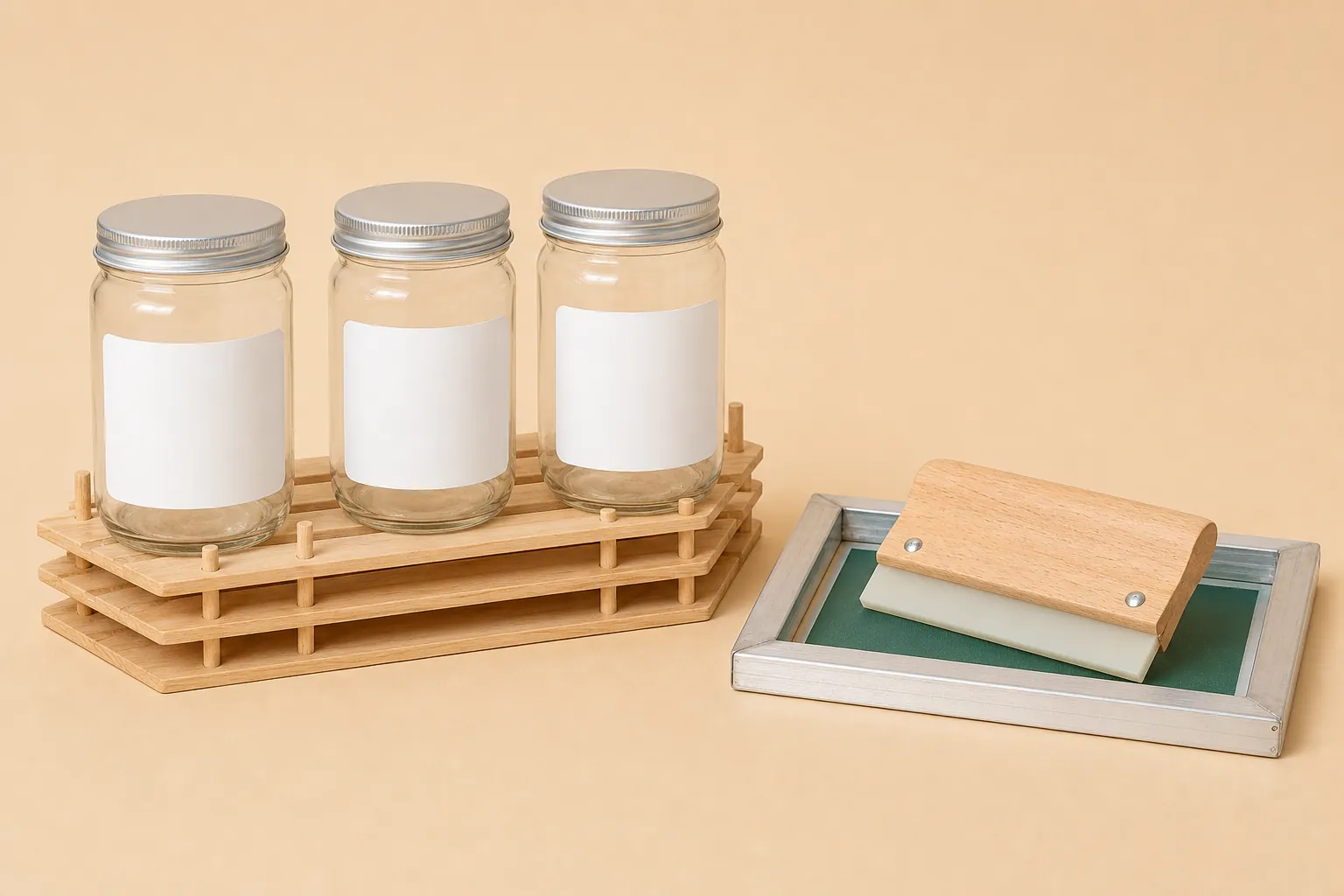
Decoration is a second factory, not a step. Screen printing needs cured ink lanes, hot stamping needs foil registration per colour, and frosted or sprayed finishes need their own drying time. Each added process is a queue, and queues multiply when a launch asks for two or three of them at once.
Glass colour behaves the same way at the furnace. Clear flint, amber and green run in regular batches; a custom colour means scheduling a batch change and flushing the previous glass, which is why custom-colour orders join the 25–40 day band even on a stock silhouette. Staying inside a common colour group is the cheapest week you will ever save.
Decoration also decides the sample you should demand: approve print on the actual curved shape, at the actual size, because a flat artwork proof hides the distortion the curvature adds.
Freight: the second clock you can control
Sea freight from China to the US or EU runs roughly 25–35 days port-to-port, and the booking only needs three numbers the quotation already contains: carton dimensions, gross weight and pallet count. Air freight compresses the same leg to about a week at several times the cost — rational for samples and launch-critical top-ups, not for a full container.
Port congestion and rolling sailings are the honest unknowns; a supplier who promises a fixed arrival date across ocean freight is selling certainty nobody owns. What a supplier can fix is the sailing window the production plan targets, and a production slot that finishes early gives the booking slack.
The Incoterms you choose decide who owns this clock. Under EXW your forwarder books the space; under CIF the supplier books carriage and minimum-cover insurance for your benefit. The CIF guide details exactly where risk and cost transfer on that term. The other four terms get the same treatment in our guides: EXW, FOB, CFR and DDP.
Five moves that compress the calendar
One: sample early and in parallel — artwork can be finished while the 7–10 day sample is in transit. Two: freeze decoration files before the production slot opens; a revised print file re-queues the whole decoration lane. Three: stay inside common glass colours unless the brand truly needs a custom batch. Four: put destination and Incoterms in the first RFQ so freight is priced with the quote, not after it. Five: reuse the packing mathematics from the quotation to book the container while production is still running.
None of the five requires a concession from the supplier; all five are sequencing decisions on the buyer’s side of the table.
Sequencing beats pressure: a launch calendar built band by band survives a slipped decoration file, while a calendar built on a single promised date does not.
Quick answers
How long does a glass jar sample take in 2026?
Seven to ten days for a stock shape, longer when a private mold is involved. Samples can travel by express courier when a buyer meeting fixes the date.
Does a custom colour always extend the lead time?
Almost always. A custom glass colour schedules a furnace batch change, which is why custom-colour and decorated orders occupy the 25–40 day band while plain stock shapes ship in 5–7 days.
Can freight run in parallel with production?
Yes. Carton dimensions, gross weight and pallet count are quoted per size before production ends, so the container can be booked while the last pallets are still being wrapped; the sea leg then adds its 25–35 days from sailing.
Send capacity, glass colour, decoration method, quantity per size, destination and your Incoterms to the inquiry form, and GlassPacker returns the lead-time band, MOQ, packing mathematics and HS 7010 documentation in one reply — with samples in 7–10 days.
Leave a comment
No comments yet — be the first to share your thoughts.