Glass Jar Export Documents in 2026: What Ships
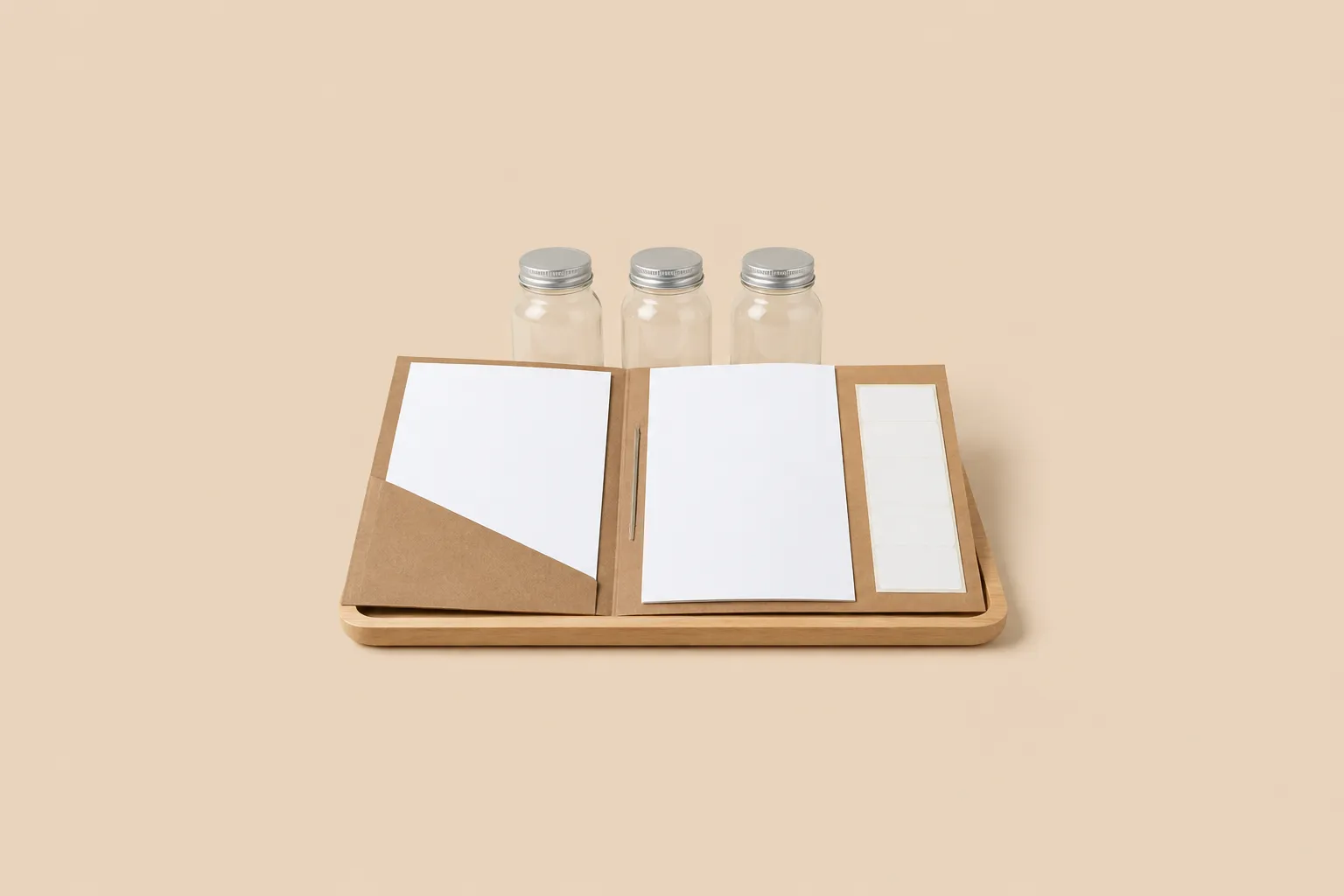
A glass jar order crosses a border as paper before it crosses as cartons: the invoice, the packing list, the HS line and the Incoterms statement decide whether clearance takes two days or two weeks. Most delays are document defects, not cargo defects. This 2026 guide lists what actually travels with a GlassPacker order — HS 7010 on every quotation, per-size packing mathematics, food-contact statements and the Incoterms-specific papers — and who issues each piece, so your broker can pre-clear while the production slot is still running.
The core file: four papers every order carries
Commercial invoice first: value, currency, the Incoterms term and the named port or place. Second the packing list — per size, the carton count, gross weight, packed dimensions and pallet configuration. Third the HS classification: glass jars and bottles move under heading 7010, and the code appears on invoice, packing list and shipping advice alike. Fourth the Incoterms statement, which fixes who books carriage, who insures and where risk passes.
None of the four is exotic; all four are where clerical errors cluster. A packing list that disagrees with the cartons by even one pallet re-opens the clearance file, which is why the numbers are quoted per size before production ends rather than typed after it.
HS 7010: one heading, many destination lines
Heading 7010 covers carboys, bottles, flasks, jars and pots of glass — the whole catalog sits under it. Destination sublines differ by market and by capacity band; your broker picks the final national line, but the four-digit heading on our documents never changes, and it is the digit string forwarders and insurers match against.
Duty treatment is a destination question, not a supplier question: we state the heading and supply the declaration data, while your broker confirms the current subline and rate for your market. What we control is consistency — the same 7010 on invoice, packing list and the shipping advice that follows the carrier’s receipt within 24 hours.
Packing mathematics as a clearance document
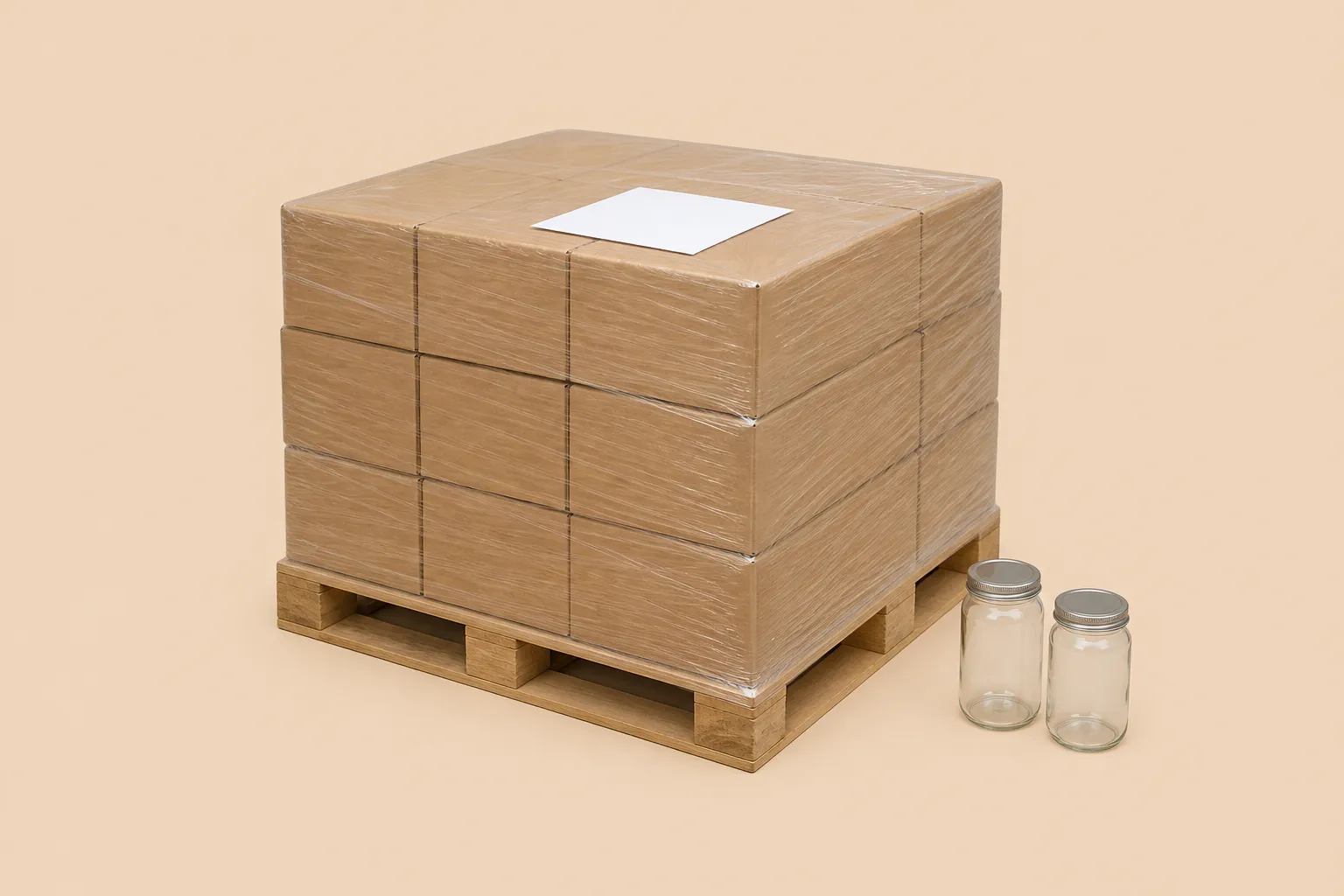
Glass clears customs by weight and volume before it clears by value. Every GlassPacker quotation lists gross weight, carton dimensions and pallet count per size, with cartons running 12 to 96 pieces depending on capacity — so a 1,000 pcs minimum lands as roughly 11 to 84 export cartons your forwarder can cube before the slot opens.
That pre-cubing is the document’s real job: the booking note, the insurance sum and the destination pallet plan all derive from it. When the packing list matches the quotation digit for digit, the broker pre-clears while production still runs — the 5–7 day stock band and the clearance file overlap instead of queueing.
Food contact: statements we make, certificates we don’t claim
Glass is an inert food-contact material: no plasticisers, no BPA, no interaction with acidic fills. The catalog runs two families — soda-lime and borosilicate — and material test reports are arranged on customer request against the applicable requirement, issued for the exact specification ordered, and shipped with samples when asked.
We do not advertise a standing certificate portfolio, because a certificate that predates your specification certifies nothing you will receive. Where a retailer or a destination market requires documented compliance, the third-party report is ordered against your fill and your market — the compliance answers state the same rule line by line.
Destination rules govern: the EU framework for food-contact materials and US food-contact provisions each set their own wording, and your quality team confirms the current text. Our side of the file is the material data those checks consume.
Incoterms decide who papers the freight
Under EXW your forwarder books and papers the whole leg; our contribution is the loading clause — the collecting vehicle is loaded at no charge once the contract confirms it — plus the carton data the booking needs. The EXW guide walks through that split. Under FOB and CFR the shipping advice is the critical paper: vessel, bill of lading number, sailing date, carton counts, gross weight and HS 7010, issued within 24 hours of the carrier’s receipt so your policy can bind the same day.
Under CIF we book carriage and the insurance: Institute Cargo Clauses (C) minimum cover by default, upgraded to Clauses (A) on full-container CIF orders at a premium typically under 0.5% of cargo value, with the sum insured at 110% of invoice as Incoterms prescribes. The CIF guide details why Clauses (C) leaves breakage uninsured on fragile cargo. Freight validity on a CFR or CIF quotation runs about 30 days against spot volatility — date the pack accordingly.

Quick answers
Which HS code do glass jars and bottles ship under?
Heading 7010, on the invoice, the packing list and the shipping advice alike. The final destination subline is your broker’s call; the four-digit heading on our documents is fixed.
Are food-contact certificates included with every order?
Not as a standing portfolio. Material test reports are arranged on request against the applicable requirement and issued for the specification you order; reports travel with samples when you ask for them.
What arrives within 24 hours of sailing on a CFR or CIF order?
The shipping advice: vessel name, bill of lading number, sailing date, carton counts, gross weight and HS 7010 — enough for your insurer to bind cover the same day and your broker to pre-clear.
Send capacity, fill type, destination and your Incoterms to the inquiry form, and GlassPacker returns the quotation with HS 7010, per-size packing mathematics and the document list for your term — MOQ 1,000 pcs per size, samples with material reports in 7–10 days.
Leave a comment
No comments yet — be the first to share your thoughts.