Custom vs Stock Glass Jars in 2026: The Math
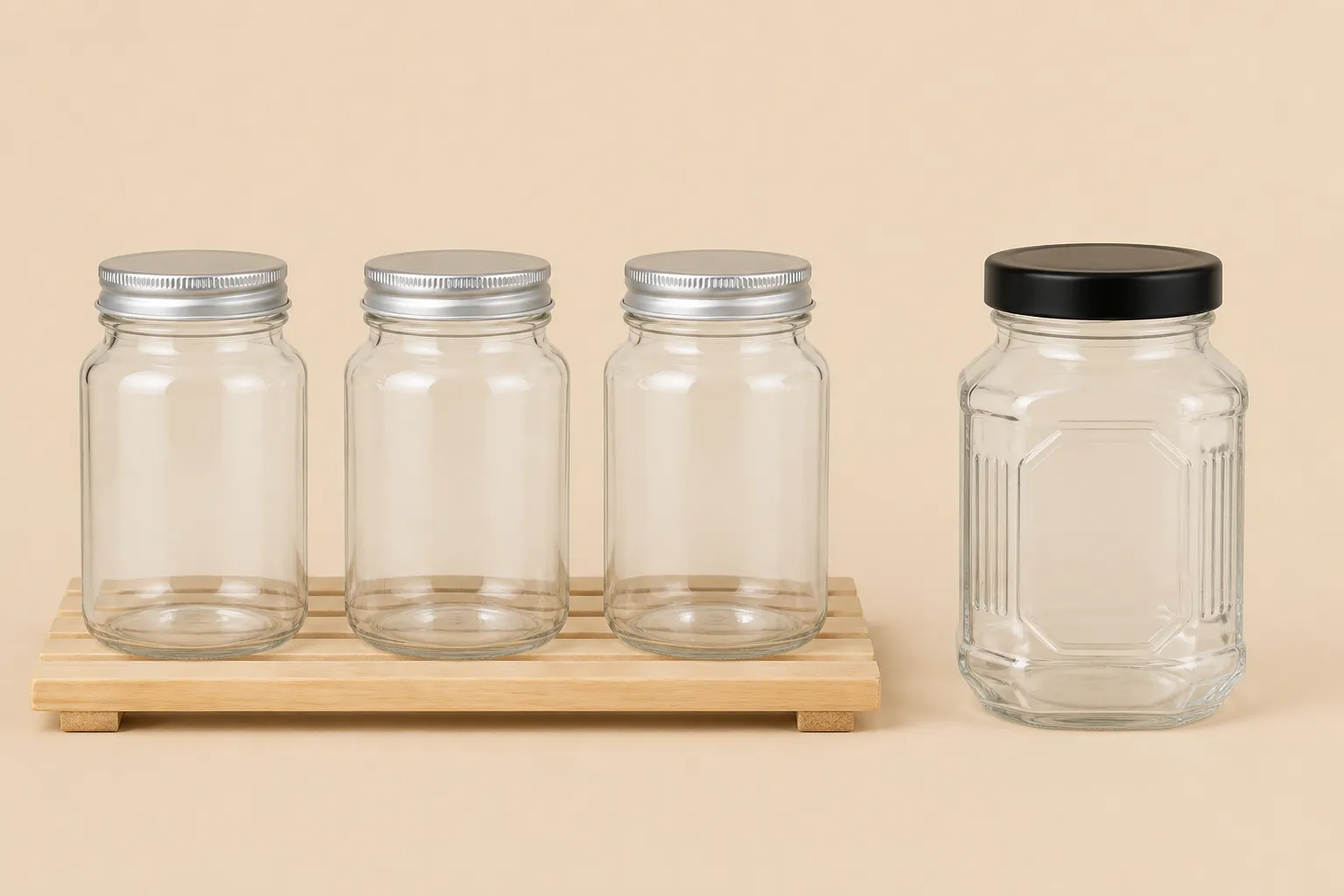
Custom vs stock glass jars is not a quality question — both paths pour from the same furnaces — it is an arithmetic question: where your volume, your launch date and your shape decision put the lowest total cost. A stock shape books production time on a mold the factory already owns; a custom shape pays for a brand-owned tool before the first piece exists. This 2026 comparison lines the two paths up on cost, calendar, minimums and exit risk, plus the column most buyers miss: the decorated stock body. At GlassPacker, 51 of the 58 live catalog designs ship in 5–7 days at an MOQ of 1,000 pcs per size.
The two paths, defined by who owns the tool
A stock shape is a silhouette the factory already runs: capacity, wall thickness and neck finish are fixed and proven on thousands of earlier runs, so an order books a production slot rather than an engineering project. Nothing is machined for you, and nothing waits on machining.
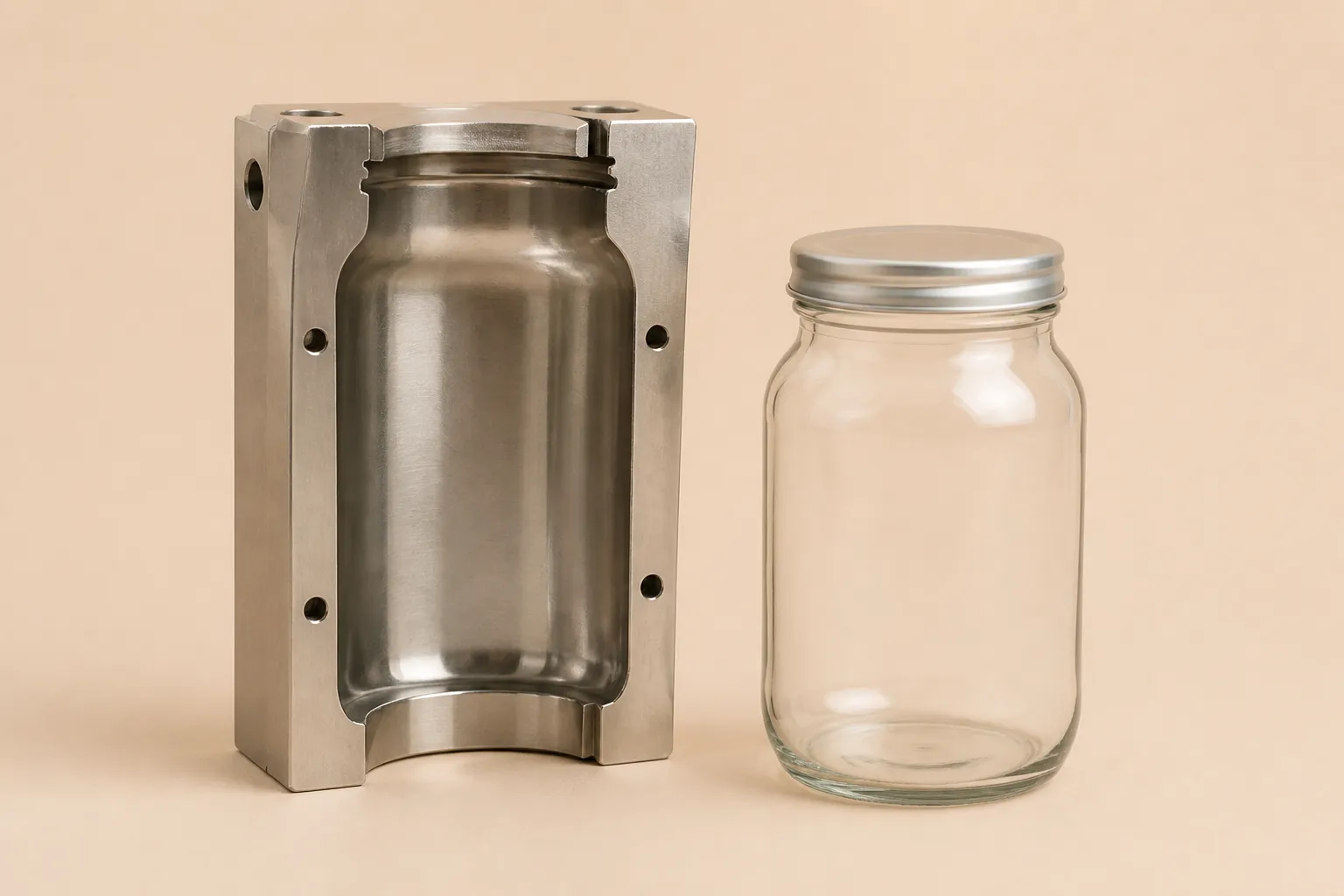
A custom shape is the opposite contract: the brand pays a one-off tooling charge, owns the mold for the life of the product, and accepts a tooling window of roughly 35–45 days before the first piece is formed. Every reorder after that pays only per-piece production cost. The stock-mold guide works through the ownership side in detail.
Cost: a gap that only volume closes
On the stock path the quotation carries no tooling line at all: per-piece production, decoration and packing, plus freight. On the custom path a one-off charge sits in front of everything, and its per-piece weight depends entirely on how many pieces it is spread over.
The arithmetic is unforgiving at small volumes: the same tooling charge spread over 1,000 pcs costs twenty times more per piece than spread over 20,000 pcs, and that gap never disappears — it only shrinks with each reorder. A first order that merely tests a market should rarely carry it.
Exit risk differs too. A stock order that fails leaves no sunk tooling behind; the next season can simply book a different silhouette. At GlassPacker the stock column carries no tooling line and an MOQ of 1,000 pcs per size across all 58 catalog designs, which is what keeps a failed test cheap.
Calendar: two entry points, one freight leg
The stock entry point is short: 5–7 days of production on proven tooling, then roughly 25–35 days of sea freight from China to the US or EU — about three months to a European shelf from the day the order is confirmed.
The custom entry point stacks a 35–45 day tooling window in front of all of that, and sampling runs longer than the 7–10 days a stock shape needs, because the sample is the first evidence that the new tool runs true.
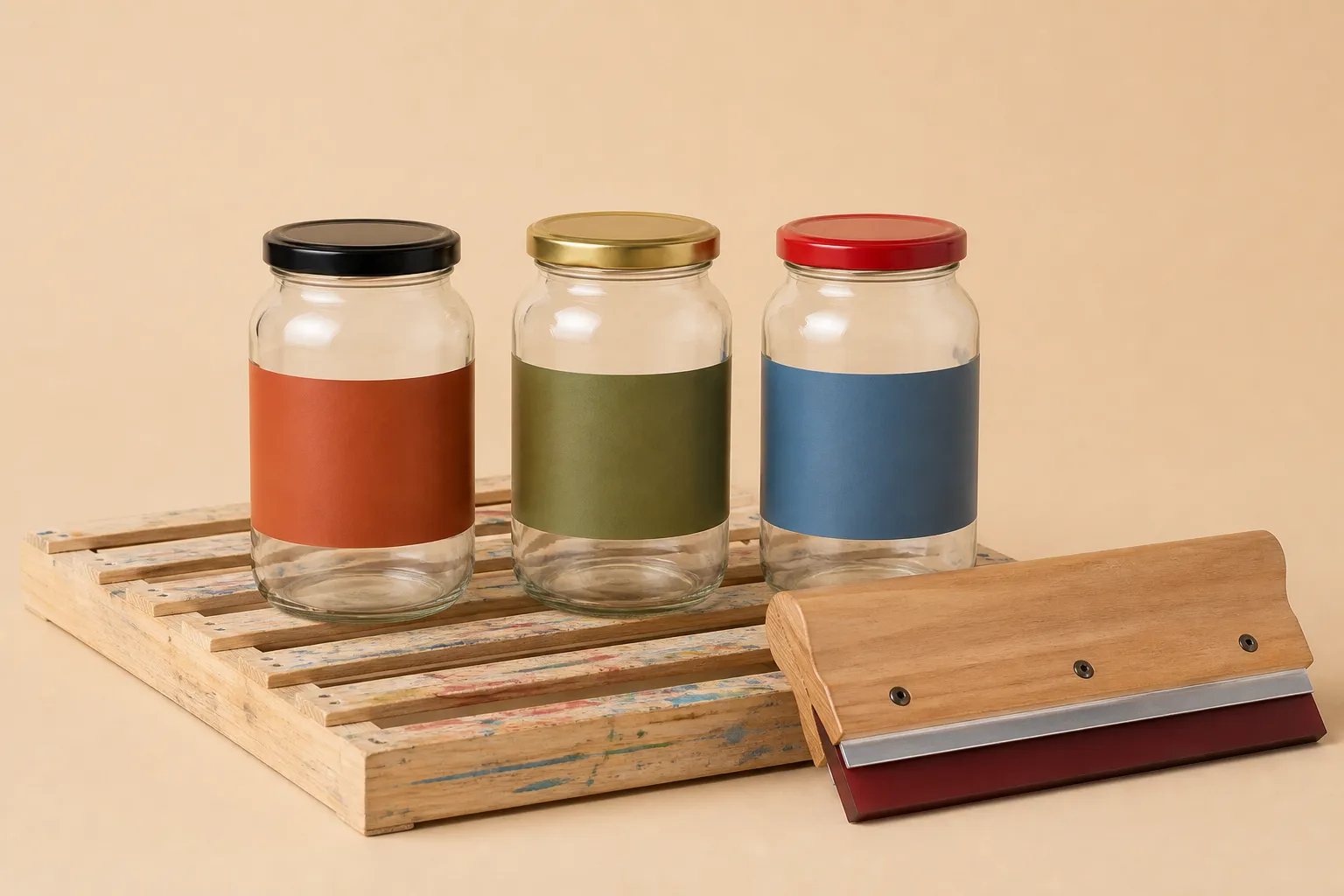
Between them sits the decorated stock body: screen printing, hot stamping, frosted finishes, cap-colour matching and non-standard glass colours all queue after forming on a stock silhouette, which is why those orders occupy the 25–40 day band. The lead-time guide maps all four bands line by line.
Minimums: fixed per size, or quoted per project
Stock minimums are published and uniform: 1,000 pcs per size, every design, every category. Because packing runs 12 to 96 pieces per export carton depending on capacity, that minimum lands as roughly 11 to 84 cartons — a quantity a forwarder can price before production ends.
Custom minimums are quoted per project and start higher, because a tooling slot and a furnace batch change have to be justified by the run behind them. A brand splitting volume across four sizes therefore pays four stock minimums, while a custom tool concentrates the whole volume on one silhouette.
Neither number is a negotiation tactic; both are scheduling physics. The MOQ guide explains why the stock minimum is set per size rather than per order.
Five questions that pick the path
One: does the first order reach 1,000 pcs per size? Below that, only the stock column is open. Two: does the launch date survive a 35–45 day tooling window plus sampling? If not, stock or decorated stock decides the season. Three: is the silhouette itself the brand asset — a proprietary shoulder or a category-defining profile? Only then does tooling buy something decoration cannot.
Four: can closure, cap colour, label, print or frost carry the differentiation? On most shelves they can, and all of them sit on a stock body. Five: will reorders reach the volume where the tooling charge amortises to a rounding error? If the answer is not yet, prove the market on stock and let the mold decision follow the sales data.
Quick answers
Which reaches the shelf faster in 2026: stock or custom glass jars?
Stock, by roughly four to six weeks before freight even starts. A stock shape adds 5–7 production days before the 25–35 day sea leg; a custom shape puts a 35–45 day tooling window and a longer sampling step in front of the same freight.
Does a custom mold raise the minimum order quantity?
Directionally, yes. The stock minimum is a published 1,000 pcs per size; a custom run is quoted per project and starts higher, because the tooling slot and the furnace batch behind it must be justified by one order. The exact figure comes back with the quote.
Can a brand start on stock and tool a custom shape later?
Yes, and that sequence is the usual one. Decoration and closures carry the launch on a stock body; once reorder volume amortises the tooling charge, the private mold is cut, owned by the brand and reused for the life of the product.
Send capacity, glass colour, decoration method, quantity per size and destination to the inquiry form, and GlassPacker returns both columns in one reply — stock band, tooling window, MOQ, packing mathematics and HS 7010 documentation — with samples in 7–10 days.
Leave a comment
No comments yet — be the first to share your thoughts.